

The ROI of Smart Home Technology in Dubai: 2026 Investment Guide

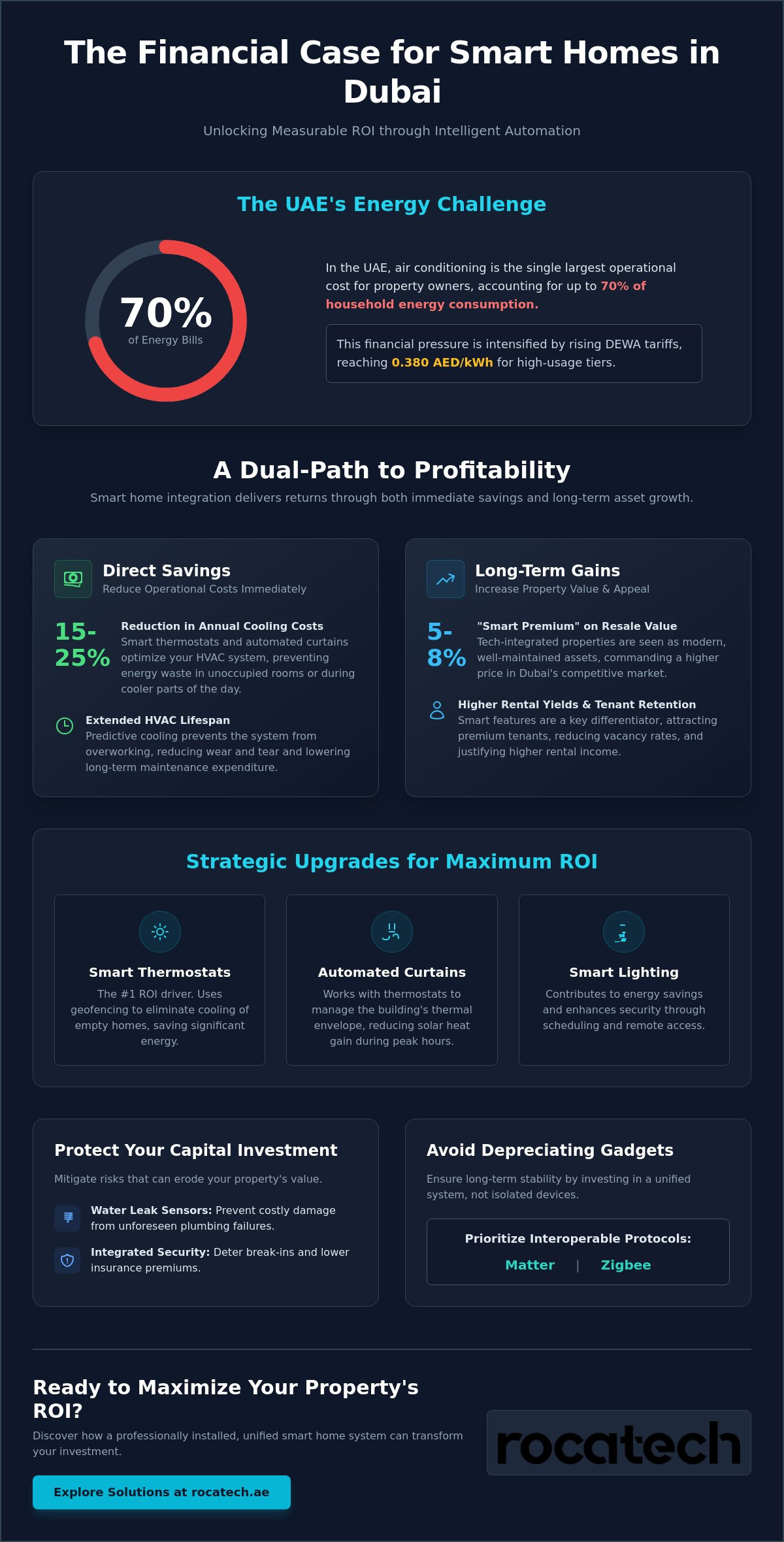
Air conditioning accounts for up to 70% of household energy consumption in the UAE, yet many investors still view automation as a secondary luxury. In a market where DEWA tariffs for high-usage residential tiers have reached 0.380 AED/kWh as of June 2026, the financial argument for integration has shifted from optional to essential. Understanding the roi of smart home dubai is now a critical requirement for any property owner who wants to protect their margins against rising operational costs and intense rental competition.
You probably recognize the challenge of managing a property from abroad or the frustration of seeing utility bills spike during the peak summer months. It's a common concern for those who value precision and long-term asset stability. We promise to show you how smart technology delivers measurable returns through energy savings, increased rental yields, and significant property value premiums. This guide provides a methodical breakdown of how predictive automation and unified platforms transform your home into a high-performing financial asset. You'll discover how to leverage these systems to ensure your investment remains competitive and profitable in Dubai's evolving real estate landscape.
Key Takeaways
- Analyze how precision cooling and smart climate control directly reduce DEWA expenses under the latest 2026 tariff structures.
- Measure the roi of smart home dubai by examining the 5-15% valuation premium that tech-equipped properties command in current rental and resale markets.
- Protect your capital investment by integrating water leak sensors and security systems that mitigate property damage and lower insurance risks.
- Ensure long-term asset stability by prioritizing interoperable protocols like Matter and Zigbee, avoiding the pitfalls of quickly depreciating standalone gadgets.
- Map out a strategic installation plan that focuses on high-yield components like smart lighting and curtain motors to maximize immediate operational efficiency.
Defining Smart Home ROI in the Dubai Market
In the context of the Emirates, calculating the roi of smart home dubai requires a shift from viewing technology as an expense to seeing it as a precision-engineered financial strategy. The return on investment is fundamentally bifurcated. One side focuses on immediate operational efficiency, while the other targets long-term capital appreciation. By 2026, the Dubai real estate market has matured to a point where integrated home automation technology is no longer an optional upgrade for luxury villas; it is a baseline expectation for high-net-worth buyers and savvy investors alike.
Local environmental factors accelerate the payback period in ways that other global markets don't experience. With air conditioning accounting for 60-70% of energy consumption, and DEWA's tiered tariff structure reaching 0.380 AED/kWh for usage above 6001 kWh as of June 2026, every degree of cooling precision translates into tangible dirhams saved. High-yield functional automation, such as smart thermostats and curtain motors, offers a much faster return than purely aesthetic upgrades because they interact directly with the building's thermal envelope. This distinction is vital for investors who prioritize system harmony over disjointed gadgets.
Capital Appreciation and Resale Value
Rental Yields and Tenant Retention
In high-competition sectors like Dubai Marina and JVC, smart integration acts as a powerful differentiator for landlords. Premium tenants, often international expats accustomed to global standards, are increasingly seeking "move-in ready" apartments that offer remote access and automated climate control. These features don't just justify higher rental yields; they fundamentally reduce vacancy rates. A property that manages its own environment while the owner is abroad provides a layer of operational security that traditional units simply cannot match, leading to more stable, long-term tenancy agreements.
Direct Financial Gains: Energy Efficiency and DEWA Savings
Direct energy savings represent the most immediate component of the roi of smart home dubai. In a climate where external temperatures frequently exceed 40°C, the HVAC system is the primary driver of operational costs. Because air conditioning accounts for up to 70% of household energy consumption in the UAE, even marginal improvements in cooling logic yield significant financial results. For a standard villa or apartment, integrating smart controls can reduce annual cooling costs by 15% to 25% based on 2026 market data. This isn't just about comfort; it's about shifting the operational profile of the building from reactive to predictive.
The payback period for these systems has shortened as DEWA tariffs have evolved. With the current fuel surcharge of 0.060 AED/kWh and a 5% VAT application, the cost of inefficiency is higher than ever. Professional installation ensures that every sensor and gateway is calibrated to your specific floor plan, preventing the common "app fatigue" associated with DIY gadgets. You can explore our full range of technical solutions at rocatech.ae to begin benchmarking your property's potential savings.
Smart Thermostats: The #1 ROI Driver
Precision cooling is the cornerstone of a high-yield investment. A professional smart thermostat dubai installation uses geofencing to detect when the home is empty, automatically adjusting the set point to a more efficient "away" mode. This eliminates the massive energy waste of cooling an unoccupied space during work hours or travel. By maintaining a stable thermal environment rather than forcing the AC to work at maximum capacity to recover from extreme heat, these systems also extend the lifespan of your expensive HVAC hardware, further reducing long-term maintenance capital expenditure.
Intelligent Lighting and Power Management
While cooling is the largest load, lighting and phantom power consumption represent secondary areas of significant waste. Implementing smart lighting control allows for occupancy-based dimming and automated shut-off schedules. This ensures that lights aren't left running in empty rooms or during daylight hours. Additionally, smart curtain motors play a vital role in the energy ecosystem by automatically closing during peak sun hours. This reduces solar gain and lowers the thermal load on the AC system. When combined with smart plugs that restrict phantom power from idle electronics, these synchronized systems create a holistic environment of efficiency that protects your bottom line.
Indirect ROI: Security, Insurance, and Property Protection
While energy savings provide visible monthly returns, the roi of smart home dubai also encompasses significant risk mitigation. For property owners, especially those managing assets from overseas, the financial impact of a single undetected failure can erase years of rental yield. Moving beyond the lifestyle benefits of automation, we must analyze how integrated security and monitoring systems act as a technical hedge against capital loss. These systems provide a layer of operational security that traditional properties lack, offering both psychological reassurance and measurable financial protection.
Preventative maintenance through sensor technology allows owners to transition from reactive repairs to predictive management. By identifying minor issues before they escalate into structural emergencies, you protect the integrity of your investment. This proactive approach is particularly valuable in Dubai's high-stakes real estate market, where the cost of specialized labor and replacement materials for luxury finishes remains high.
Water Leak Sensors and Risk Mitigation
Water damage is one of the most common and expensive threats to property value in the UAE. A major pipe leak or a failed AC drain line in a Dubai villa can easily result in repair costs exceeding 20,000 AED, particularly when custom cabinetry or premium flooring is involved. In contrast, a water leak sensor represents a minimal investment that provides immediate ROI. These devices detect moisture at the source and send real-time alerts to your smartphone. When integrated with a smart hub and main water shut-off valves, the system can automatically terminate the water supply the moment a leak is detected, effectively preventing a minor drip from becoming a catastrophic financial event.
Smart Security and Insurance Benefits
The presence of professional-grade surveillance and access control systems directly influences the risk profile of a property. Many insurance providers now offer lower premiums for homes equipped with certified security hardware. Utilizing home security cameras with high-definition capabilities and cloud storage allows for remote property verification, which is essential for absentee landlords. These systems don't just deter intrusion; they provide a verifiable audit trail for insurance claims and tenant disputes.
To qualify for the best insurance rates and ensure system harmony, a professional smart home installation dubai is typically required. Certified installers ensure that devices like smart locks and video doorbells are mapped correctly to your network infrastructure. This level of technical precision ensures that your security perimeter remains stable and reliable, providing the documented evidence often needed to negotiate more favorable coverage terms with regional insurers.
Addressing the "Depreciating Asset" Objection
A common hesitation among property investors is the fear that technology will become obsolete before it pays for itself. This concern usually stems from confusing consumer-grade gadgets with architectural infrastructure. When evaluating the roi of smart home dubai, it's essential to distinguish between standalone devices and integrated systems. While a specific tablet or speaker might lose relevance in a few years, a robust automation backbone increases the long-term utility and marketability of the property. Modern systems are designed to be modular, allowing for targeted hardware updates without requiring expensive structural re-wiring.
By focusing on the underlying system harmony rather than individual pieces of hardware, you ensure that the technology remains an asset rather than a liability. Professional integration ensures that your property's technical ecosystem remains relevant for 10 years or more by utilizing standardized communication channels. This strategic approach protects your capital from the rapid depreciation cycles typically associated with consumer electronics. Consult our experts at rocatech.ae to design a modular automation strategy that grows with your property.
Future-Proofing with Universal Protocols
The 2026 market has moved decisively toward interoperability. Investors must avoid "walled gardens" that trap a property in a single manufacturer's ecosystem, as this significantly limits future resale appeal. By prioritizing universal protocols like Matter and Zigbee, you ensure that your smart hub and gateway can communicate with a vast range of devices from different brands. This flexibility allows future owners or tenants to customize the environment to their specific needs without dismantling the existing infrastructure. Selecting cross-compatible hardware is a fundamental requirement for maintaining a high asset valuation in a tech-literate market like Dubai.
The Cost of Poor DIY Installation
Attempting a DIY setup often leads to hidden costs that compromise your total return. Unreliable connectivity, frequent system resets, and disjointed apps create a poor user experience that can actually deter premium tenants. Professional installation provides the technical stability that high-stakes environments require. A stable, professionally mapped network increases the perceived value for future buyers who want the benefits of automation without the troubleshooting burden. Reliability is a significant psychological benefit; it provides owners with the reassurance that their property is being managed efficiently even when they are out of the country.
- Professional mapping ensures 100% signal coverage across large villa floor plans.
- Certified setups are often a prerequisite for insurance-related premium discounts.
- Seamless integration between lighting, cooling, and security creates a unified "smart" experience that justifies higher rental rates.
Maximizing Your ROI with Rocatech Solutions
Achieving a significant roi of smart home dubai requires more than just purchasing high-end hardware. It demands a technical partnership rooted in precision and an understanding of the regional operational environment. At Rocatech, we move away from generic automation toward a consultative model that prioritizes long-term system harmony. By aligning your property's technical infrastructure with your financial objectives, we ensure that every smart hub and gateway serves as a reliable asset rather than a depreciating gadget. Our focus on operational improvement allows property owners to secure their investments against the unique challenges of the Dubai climate.
Precision installation is the final step in ensuring technical reliability. A system is only as valuable as its uptime and accuracy. We specialize in the integration of specialized automation components that are calibrated for the specific electrical standards and thermal requirements of the UAE. This dedication to excellence ensures that your system provides the psychological benefit of reliability, allowing you to manage your property with total confidence, regardless of your physical location.
Our Consultative Approach
We begin every engagement by identifying the high-yield zones of your property. This involves a methodical audit of your current energy usage and building layout to project specific returns. Our expertise extends to the nuances of major Dubai communities, including Emaar, Nakheel, and Damac developments. Whether you own a high-rise apartment in Dubai Marina or a sprawling villa in Palm Jumeirah, we tailor the network topology to ensure 100% signal stability. This collaborative relationship building ensures that your system remains functional and relevant throughout the entire lifecycle of your property ownership.
Getting Started: The ROI Starter Kit
Strategic scaling is often the most effective way to maximize immediate returns. We recommend starting with high-impact devices that directly influence your monthly overhead. Prioritizing smart thermostats and smart lighting control provides the most immediate reduction in DEWA expenditure. These components offer a predictable payback period by addressing the primary sources of energy waste in the desert environment. Once the foundation of efficiency is established, you can expand the ecosystem to include risk-mitigation tools.
- Smart thermostats and curtain motors to manage the thermal load.
- Smart lighting and motion sensors to eliminate phantom power waste.
- Water leak sensors and home security cameras to protect capital assets.
- Smart door locks and video doorbells to streamline tenant management.
As your property needs evolve, our modular systems allow for the seamless addition of smart plugs and secondary sensors without requiring a full system overhaul. This approach ensures that your initial investment remains stable while providing the flexibility to adopt future technical innovations. To begin your journey toward a more efficient and profitable property, contact us for a tailored smart home consultation dubai. We are ready to help you benchmark your property's potential and implement a strategy that delivers measurable financial success.
Securing Your Property’s Financial Future
Rocatech was founded in 2021 to provide specialized expertise within high-stakes technical environments. We offer comprehensive service models that cover the entire system lifecycle, ensuring your infrastructure remains stable and effective. Our deep local knowledge of Dubai’s unique climate and electrical standards allows us to deliver solutions that are both durable and highly efficient. It’s time to transform your property into a precision-managed asset that offers both financial and psychological peace of mind.
Book Your High-ROI Smart Home Consultation with Rocatech to begin your property’s technical transformation today.
Frequently Asked Questions
Does a smart home actually increase property value in Dubai?
Integrated smart systems increase property value by providing a 5% to 10% premium over traditional homes in the current market. This valuation boost occurs because buyers prioritize properties with established technical infrastructure that reduces immediate renovation needs. Tech-equipped apartments in high-demand districts can command premiums of up to 15% according to 2026 market analysis from Pearlshire.
How much can I save on my DEWA bill with a smart thermostat?
You can expect to reduce your cooling costs by 15% to 25% annually through precision climate control. Since air conditioning accounts for up to 70% of a typical household bill in the UAE, these savings significantly impact your total DEWA expenditure. Utilizing geofencing and automated scheduling ensures you aren't paying to cool an empty property during peak tariff hours.
What is the average payback period for a smart home installation?
The payback period for high-impact automation is often achieved within the first 24 months of operation. This rapid return is driven by the immediate reduction in utility bills and the avoidance of high-cost emergency repairs through leak detection. The long-term roi of smart home dubai remains high as the system protects the building's thermal envelope and extends HVAC hardware lifespan.
Are smart home systems compatible with older villas in areas like Jumeirah?
Smart systems are fully compatible with older villas because modern wireless protocols like Zigbee and Matter don't require structural electrical wiring. Utilizing a centralized smart hub and gateway allows for seamless integration in established areas like Jumeirah or Umm Suqeim. This modular approach enables owners to modernize their properties without the expense or disruption of a full renovation.
Do tenants in Dubai pay more for smart apartments?
Tenants in Dubai's premium districts are willing to pay higher rents for apartments that offer lower monthly utility costs and remote management. Features like smart door locks and automated lighting provide a "move-in ready" experience that appeals to international expats. Landlords often see reduced vacancy rates because these technical advantages differentiate their units in a competitive rental market.
How does smart home technology affect home insurance in the UAE?
Integrated technology can lower your home insurance premiums by reducing the risk profile of your property. Insurance providers in the UAE increasingly recognize the value of water leak sensors and home security cameras in preventing catastrophic claims. Having a professionally installed system provides the documented reliability that insurers require to offer more favorable coverage terms.
Is professional installation better than DIY for ROI?
Professional installation is superior for maximizing the roi of smart home dubai because it ensures technical stability and system harmony. DIY setups often suffer from connectivity gaps and disjointed applications which can deter future buyers and decrease perceived value. A certified installer maps the network correctly to ensure every sensor contributes to the building's efficiency and long-term asset value.
What smart features are most in demand for Dubai buyers in 2026?
Buyers in 2026 are most interested in smart thermostats, automated curtain motors, and comprehensive security systems. There is a strong trend toward unified platforms that use the Matter protocol for universal compatibility across different device brands. Features that combine energy intelligence with property protection, such as automated water shut-off valves, are now standard expectations in the luxury segment.