

Smart Thermostat Dubai: The Complete 2026 Guide to Precision Cooling

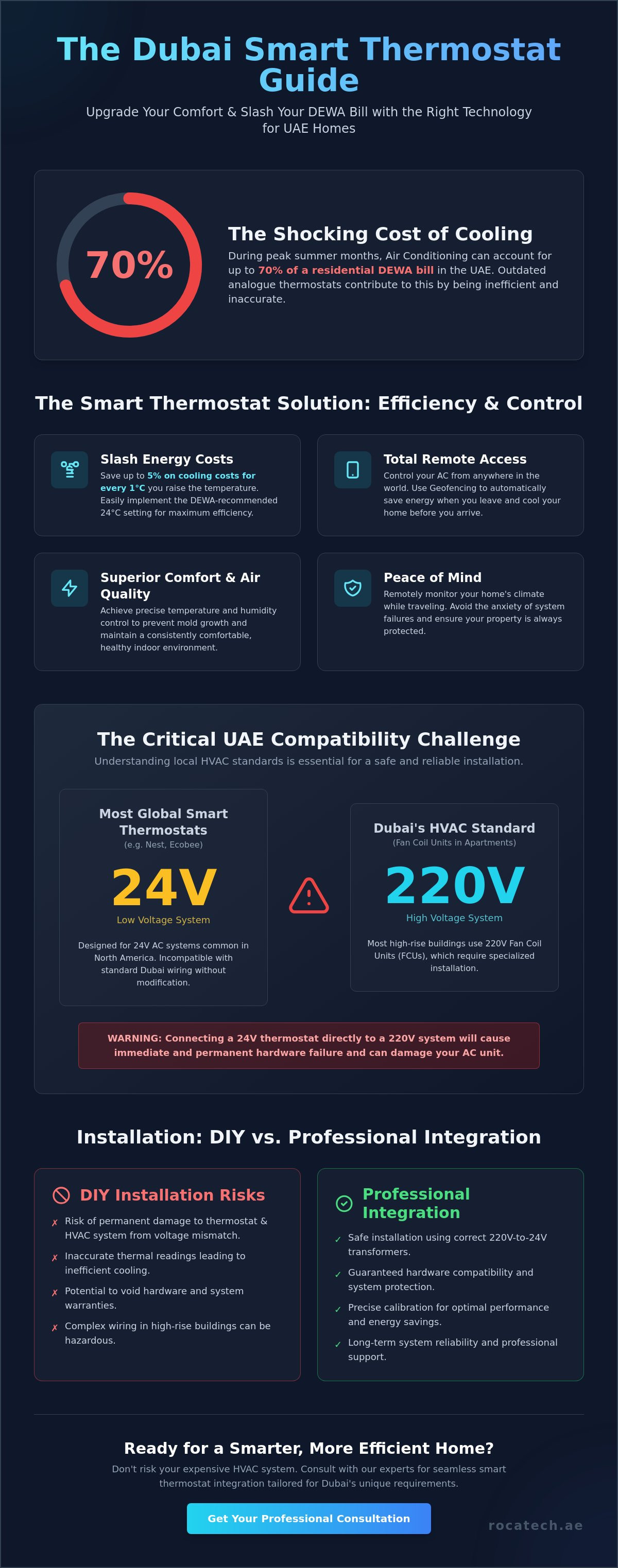
Air conditioning accounts for approximately 70% of the average residential DEWA bill during peak summer months in the UAE. This staggering statistic highlights why a standard analogue dial is no longer sufficient for modern living. If you've struggled with inaccurate temperature readings or the frustration of manually adjusting your AC throughout the night, you understand the need for a more reliable system. Integrating a smart thermostat dubai homeowners can trust requires more than just buying the latest gadget; it demands a technical understanding of local HVAC standards.
We've developed this guide to help you select, install, and optimize the right hardware for Dubai's specific 220V Fan Coil Unit (FCU) systems. You'll discover how to slash energy consumption by up to 5% for every degree you increase your setting, following official DEWA Tarsheed recommendations. This article provides a technical roadmap to achieving remote AC control and consistent comfort through professional-grade automation. We will examine the latest 2026 hardware compatibility, explain ESMA energy efficiency requirements, and provide a clear path to reducing your monthly utility overhead.
Key Takeaways
- Learn the critical technical distinctions between 24V and 220V wiring to ensure your hardware is compatible with Dubai's standard Fan Coil Unit (FCU) systems.
- Identify the best smart thermostat dubai models for your specific property, from adaptive learning units for villas to multi-room sensing solutions for large apartments.
- Understand how precise temperature calibration and humidity management protect your HVAC system from the operational strain caused by the UAE's extreme climate.
- Discover the risks associated with DIY installation in complex high-rise environments and why professional integration is necessary for accurate thermal readings.
- Explore a consultative approach to home automation that prioritizes long-term system reliability and seamless integration with your existing cooling infrastructure.
Optimising Home Comfort and Efficiency: Why Dubai Needs Smart Thermostats in 2026
Cooling in the UAE is an operational necessity that demands technical precision. The extreme humidity and heat typical of the region place an extraordinary burden on standard HVAC systems, often leading to premature wear and inefficient cycling. Most traditional thermostats rely on outdated analogue logic that fails to account for the rapid thermal changes in modern high-rise apartments or expansive villas. By integrating a smart thermostat dubai property owners can shift from inefficient manual "on/off" cooling to a sophisticated, predictive climate management strategy. This transition isn't just about personal comfort; it's a strategic move aligned with the UAE Net Zero 2050 goals, reducing the carbon footprint of residential cooling through specialized automation.
Combating High DEWA Bills with Intelligent Scheduling
DEWA data reveals that air conditioning represents roughly 70% of the average residential energy bill during peak summer months. Every degree matters in this high-cost environment. Modern smart thermostats provide the granular control needed to implement the DEWA-recommended setting of 24°C with total accuracy. Utilizing "Eco-modes" ensures your AC doesn't overwork during peak tariff hours, effectively flattening your energy demand profile. Geofencing technology utilizes your smartphone's location to automatically transition your cooling system into an energy-saving state the moment you leave your villa, ensuring you never pay to cool an empty home. For a deeper dive into these savings, explore our guide on how to lower your DEWA bill with a smart AC thermostat.
The Psychological Benefit of a Controlled Environment
Technical reliability provides a level of emotional reassurance that manual systems cannot offer. In Dubai, consistent humidity control is vital to prevent mould growth and maintain high indoor air quality, especially in properties that remain closed during the day. A smart system monitors these levels in real-time, making micro-adjustments to the Fan Coil Unit (FCU) to ensure the environment remains stable. When you are travelling, the ability to remotely verify that your home is secure and climate-controlled removes the anxiety of potential system failures. Integrating these thermostats with other systems, such as smart curtain motors or motion sensors, creates a comprehensive ecosystem. This synergy ensures that your home remains a sanctuary of precision-managed comfort, regardless of the external environmental conditions.
Understanding AC Compatibility: Fan Coil Units (FCU) and Dubai’s HVAC Standards
Hardware selection depends entirely on the underlying infrastructure of your property. Dubai isn't a one-size-fits-all market for cooling technology. Most high-rise apartments across the city utilize Fan Coil Units (FCU), which rely on chilled water provided by a central cooling plant. In contrast, standalone villas often use Direct Expansion (DX) units that function more like traditional split systems. Identifying your specific infrastructure is the primary step in selecting a smart thermostat dubai homeowners can rely on for long-term stability. If you choose a device designed for North American 24V standards without verifying your local 220V wiring, you risk immediate hardware failure or permanent damage to your HVAC control board.
The 'C-Wire' and Voltage Challenge in the UAE
Voltage mismatch is the most common cause of installation failure in the region. Most globally recognized smart thermostats, such as Nest or Ecobee, operate on 24V alternating current. However, the standard electrical output for HVAC controllers in Dubai is often 220V. To bridge this gap, technical experts utilize 24V transformers or specialized power extender kits to protect the delicate circuitry of the smart device. The common wire, or "C-wire," is a dedicated line that provides a continuous return path for power, enabling the thermostat’s Wi-Fi and display to function without relying on batteries. Properly addressing this power requirement allows homeowners to save as much as 10% a year on heating and cooling by ensuring the device remains online for predictive scheduling.
Multi-Speed Fan Control: A Dubai Necessity
Most Dubai AC units feature three distinct fan speeds: low, medium, and high. A basic smart thermostat might only support a single-speed configuration. This limitation forces the fan to run at one constant speed, which significantly reduces your ability to manage indoor humidity and airflow effectively. Selecting a model that supports multi-stage cooling and multi-speed fan logic is essential for maintaining a consistent room temperature. This level of control prevents the system from overshooting its target temperature and reduces the acoustic footprint of your cooling system during the night. For a deeper technical breakdown, you can consult our ultimate guide to precision cooling control in Dubai.
Achieving system harmony requires a consultative approach to ensure every component communicates correctly. If you're unsure about your specific wiring configuration, our team can help you select the right smart hardware for your property's unique HVAC layout. Precision in the installation phase prevents operational failure when the summer heat reaches its peak.
Evaluating the Best Smart Thermostats for UAE Homes: A 2026 Comparison
Selecting the right hardware for a smart thermostat dubai installation involves balancing technical capability with aesthetic integration. While many devices claim efficiency, only those that are ENERGY STAR certified provide a verified baseline for energy reduction. In 2026, three models lead the market for their ability to withstand regional environmental stressors while providing precise climate control. The Google Nest Learning Thermostat (4th Gen) remains a primary choice for villas due to its advanced occupancy algorithms. The Ecobee Smart Thermostat Premium offers superior multi-room sensing for large apartments, while the Honeywell Home T9 provides a robust, simplified interface for those prioritizing core functionality over complex automation.
Evaluation criteria for these systems must go beyond the user interface. Technical specialists prioritize three metrics: wiring compatibility with Fan Coil Units, app latency in the local network environment, and support for Zigbee or Z-Wave protocols. These protocols ensure your thermostat can communicate with a smart hub or gateway without congesting your home Wi-Fi. A stable connection is vital for maintaining the system harmony required to prevent operational failures during the peak of the UAE summer.
Nest vs. Ecobee: The Dubai Showdown
The choice between Nest and Ecobee often depends on your property developer's HVAC layout. Nest’s adaptive learning excels in standalone villas where thermal mass varies significantly between the ground and first floors. Ecobee is frequently the better fit for Emaar or Damac apartments because its remote sensors accurately manage the temperature "hot spots" caused by floor-to-ceiling glass. If your living room reaches 26°C while your bedroom stays at 22°C, Ecobee’s averaging logic provides a more balanced environment. For a detailed breakdown of which model fits your specific building type, consult our best smart thermostat for Dubai apartments guide.
Regional Warranty and Support Considerations
Technical reliability is a psychological benefit that stems from knowing your equipment is backed by local support. Importing a US or UK spec thermostat often leads to frustration because those units aren't always designed for the 50Hz frequency of the UAE power grid. Buying local UAE-spec units ensures the firmware is pre-configured for regional time zones and Celsius-first temperature units. It also guarantees access to replacement parts and professional calibration services that understand the specific dust and humidity challenges of the Middle East. Choosing a regional model ensures that your investment in a smart thermostat dubai remains protected throughout the entire lifecycle of the device.
Professional Integration vs. DIY: Ensuring System Reliability and Performance
While DIY projects offer a sense of personal accomplishment, the high-stakes environment of a Dubai HVAC system leaves little room for error. A smart thermostat dubai homeowners choose for their property is only as effective as its integration. In complex high-rise environments, improper installation can lead to more than just a blank screen; it can cause significant electrical issues or disrupt the chilled water valve logic that serves your entire floor. Professional calibration is the only way to ensure your device reads the "real" room temperature rather than the heat radiating from the wall cavity behind the mounting plate.
Beyond basic mounting, true efficiency comes from connecting your device to a dedicated smart hub gateway. This centralizes control and allows for advanced testing of fan speed modulation. We verify that the thermostat correctly cycles through low, medium, and high speeds while maintaining essential compressor protection delays. These delays prevent the system from short-cycling, which is a leading cause of AC motor failure in the UAE. This methodical approach ensures your cooling system remains operational during the most demanding summer peaks.
The Dangers of Incorrect Voltage Wiring
Applying 220V directly to a 24V smart thermostat will immediately short-circuit the HVAC control board. This is a costly mistake that often requires a full system component replacement. Every Rocatech installation begins with a professional multimeter test to verify line voltage and identify the common wire. We prioritize clean cable management and custom wall-plate finishing to ensure the hardware looks as professional as it performs. This precision in the initial setup provides the emotional reassurance that your system won't fail when you need it most.
Software Configuration and Ecosystem Harmony
Technical excellence extends into the software layer. We configure custom scenes like "Guest Mode" or "Leaving Home" to automate your energy savings without manual input. For maximum thermal efficiency, we ensure your thermostat communicates with your smart curtain motor to block the intense midday sun. This collaborative ecosystem reduces the load on your AC by preventing solar heat gain. Finally, a professional handover ensures you're fully trained on the app interface. This training empowers you to manage your home's climate with the confidence of an expert. If you're ready to ensure your cooling system is calibrated for peak performance, you can schedule a professional installation with our expert team today.
Rocatech’s Precision Solutions: Elevating Dubai’s Smart Living Standards
Rocatech operates as a seasoned expert and a dependable ally in the Middle Eastern automation sector. We understand that a smart thermostat dubai residents invest in is a vital component within a high-stakes technical environment. Our dedication to precision and excellence moves away from aggressive sales tactics. Instead, we prioritize a consultative partnership approach that focuses on the entire lifecycle of your home's climate control systems. Technical reliability is a psychological benefit. It provides significant emotional reassurance for property owners who cannot afford operational failures during the extreme summer heat.
Our involvement ensures that your cooling infrastructure works in perfect harmony with the rest of your home. We don't just sell hardware; we provide system harmony. By integrating your thermostat with our smart hub gateways and motion sensors, we create a streamlined ecosystem that responds to your presence and environmental changes automatically. This methodical approach to automation respects your time and ensures all technical specifications are met for a professional living environment. We're committed to stability and precision in every project we undertake.
Expert Consultations for Dubai Villas and Apartments
Every property in the UAE presents unique thermal challenges. A villa in a desert community has different cooling requirements than a high-rise apartment with floor-to-ceiling glass. Rocatech begins every engagement with a technical audit of your current AC setup. We examine the specific mechanics of your Fan Coil Units and existing control logic before recommending a smart thermostat dubai homeowners can trust. This ensures that the hardware we provide is perfectly suited to your property's specific needs. We build customized automation plans that are designed to grow with your home. You can explore our comprehensive range of Rocatech Dubai's partner services to see how we support your long-term operational efficiency.
Securing Your Investment with Professional Setup
Professional configuration is the only way to ensure your smart home technology meets international standards of excellence. Our team brings global competence and regional expertise to every installation, ensuring your system is grounded in practical, real-world applications. The peace of mind that comes with a professionally integrated smart home installation in Dubai is invaluable. We handle the technical complexities so you can enjoy the functional benefits of a precision-managed environment. Our commitment to durability and quality means your investment is protected against the harsh local climate. If you're ready to transition to a more efficient and reliable cooling strategy, contact Rocatech today for a precision thermostat consultation.
Securing Your Home’s Climate Future
Achieving total climate control in the UAE requires a shift from reactive manual adjustments to proactive, automated precision. We've explored the technical necessity of matching your hardware to Dubai's unique 220V Fan Coil Unit standards and the significant energy savings that follow. Selecting a smart thermostat dubai homeowners can trust is a strategic investment in both environmental sustainability and monthly operational efficiency. Professional integration remains the only way to ensure these sophisticated devices communicate correctly with central chiller systems while protecting your HVAC infrastructure from electrical strain.
As an authorised reseller of leading smart brands, Rocatech provides the regional expertise needed to bridge the gap between global technology and local infrastructure. Our Dubai-based technical support team specializes in expert integration for FCU and Chiller systems, ensuring your home remains a sanctuary of consistent comfort. It's time to experience the psychological benefit of a perfectly managed environment that respects both your budget and the planet. Book Your Professional Smart Thermostat Consultation with Rocatech today and take the first step toward a more efficient, intelligent home.
Frequently Asked Questions
Will a smart thermostat really work with my AC in a Dubai apartment?
Yes, smart thermostats are compatible with the Fan Coil Unit (FCU) systems typically found in Dubai apartments. Success depends on ensuring the device supports the local 220V wiring standard or utilizes a 24V transformer. It's essential to verify your specific wiring configuration before purchase to ensure the hardware can communicate with the central chiller plant effectively.
How much can I actually save on my DEWA bill with a smart thermostat?
DEWA states that you can save up to 5% on air conditioning electricity consumption for every degree you increase the thermostat setting. Since cooling accounts for approximately 70% of a residential DEWA bill during peak summer months, precise scheduling and occupancy sensing lead to a measurable reduction in monthly utility overhead. Using a smart thermostat dubai homeowners trust ensures these savings are achieved through technical accuracy.
Do I need a special 'C-wire' for installation in the UAE?
Yes, a "C-wire" or common wire is required to provide continuous power to the thermostat's Wi-Fi module and display. Many Dubai HVAC systems lack this dedicated wire, which requires the use of a power extender kit or a 24V transformer during installation. This setup ensures the device remains online and functional without relying on internal batteries.
Can I control my Dubai AC from outside the country using a smart thermostat?
Yes, you can manage your home's climate from anywhere in the world using a dedicated smartphone application. As long as your home Wi-Fi remains active, the thermostat stays connected to the cloud, allowing you to adjust temperatures or monitor humidity levels while travelling. This feature provides significant emotional reassurance and prevents energy waste while your property is vacant.
What is the best smart thermostat for a large villa in Emirates Hills or Jumeirah?
The Google Nest Learning Thermostat (4th Gen) is the premier choice for expansive villas in communities like Emirates Hills. Its adaptive learning algorithms are specifically designed to manage the variable thermal loads of larger properties. When paired with remote sensors, it ensures consistent cooling across multiple floors and large open-plan living areas by averaging temperature data points.
Is professional installation required for a Nest thermostat in Dubai?
Professional installation is highly recommended to avoid the risk of short-circuiting your HVAC control board. Most Dubai properties utilize 220V systems, while smart thermostats like Nest are designed for 24V standards. A professional technician ensures that voltage conversion is handled safely and that the system is calibrated to read accurate room temperatures rather than wall heat.
Can a smart thermostat control the fan speed of my AC unit?
Yes, advanced smart thermostats can control the multi-speed fans commonly found in Dubai AC units. It's critical to select a model that explicitly supports multi-stage cooling and fan speed modulation (Low, Medium, High). This capability allows the system to maintain a stable environment and manage humidity levels more effectively than a basic single-speed controller.
What happens to my smart thermostat if the Wi-Fi goes down in my Dubai home?
Your thermostat will continue to function as a traditional controller and follow its pre-programmed schedule if the Wi-Fi connection fails. You'll lose the ability to control the device remotely or receive real-time energy reports via the app until the connection is restored. Once the internet returns, the device automatically reconnects and synchronizes your data with the cloud server.