

How to Prevent Water Damage in Your Dubai Apartment: The 2026 Smart Guide

Relying solely on your building's maintenance team to protect your home is a gamble that most Dubai residents can no longer afford to take. You likely value the sophistication of high-rise living, yet you're all too familiar with the anxiety of a neighbor's renovation causing hidden leaks or an AC unit overflowing during the humid summer months. As insurance premiums in the UAE have risen by up to 20 percent following the 2024 storms, the need to proactively prevent water damage in your Dubai apartment has transitioned from a luxury to a technical necessity.
We understand that operational stability in your home is paramount for your peace of mind. This guide provides a strategic roadmap to deploying high-precision automated solutions, such as a specialized Smart Hub and Water Leak Sensors, to create a 24/7 defense against moisture. You'll discover how to integrate real-time smartphone alerts while staying aligned with the latest 2026 public safety regulations. We will examine the critical vulnerabilities of modern apartments and detail the exact smart configurations required to eliminate the risk of expensive mold remediation and structural repairs.
Key Takeaways
- High-rise plumbing architectures create unique vulnerabilities where a single pipe failure can cause cascading damage across multiple floors.
- Routine manual maintenance of balcony gaskets and AC drainage trays is a critical first step, yet it's often prone to human error and oversight.
- You'll learn how to prevent water damage in your Dubai apartment by deploying an integrated network of Water Leak Sensors for 24/7 monitoring.
- Strategic sensor placement in high-risk zones, including the AC closet and kitchen, ensures that even hidden leaks are detected in seconds.
- Connecting specialized sensors to a centralized Smart Hub offers a high-precision solution that safeguards your property and ensures compliance with 2026 safety regulations.
Understanding the Unique Water Damage Risks in Dubai Apartments
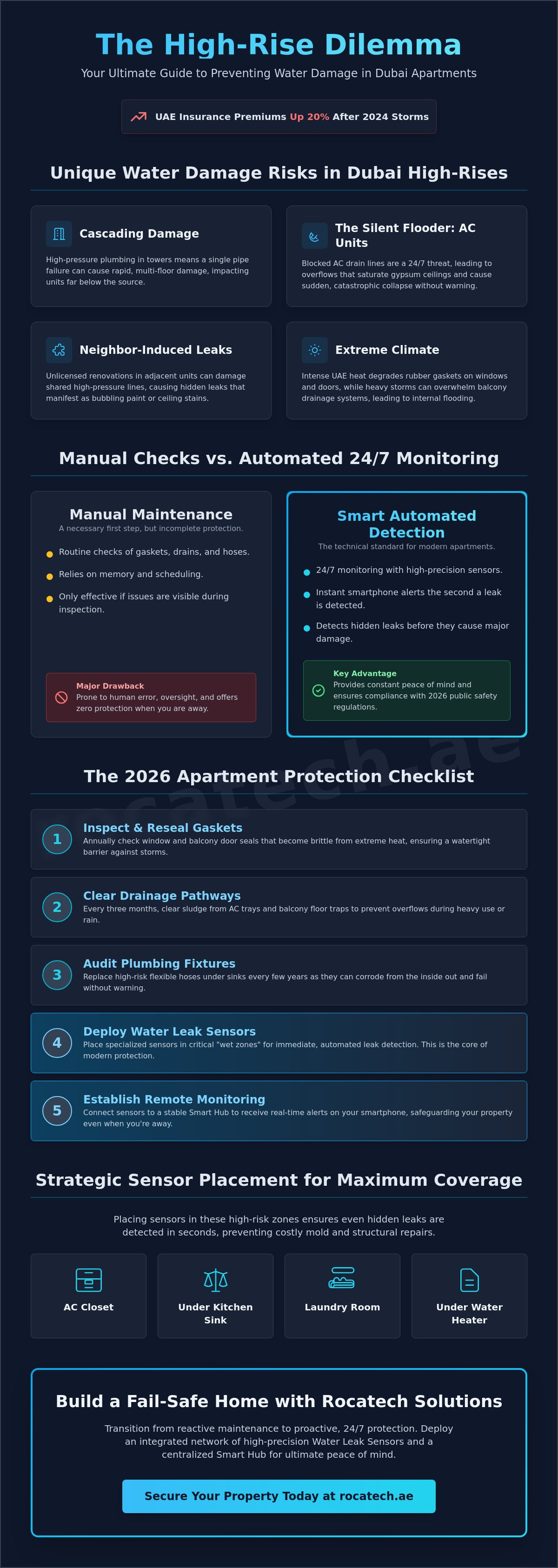
Living in a Dubai high-rise offers unparalleled views and modern convenience, yet the vertical nature of these structures introduces specific operational risks. In a tower, plumbing systems operate under high pressure to move water across dozens of floors. When a failure occurs, gravity ensures the impact is rarely localized. A single burst pipe or a failed gasket on an upper level can cause cascading damage that penetrates multiple units below within minutes. To effectively prevent water damage in dubai apartment settings, you must recognize that your property's integrity is technically linked to the maintenance standards of every unit above yours.
Environmental factors in the UAE further complicate this risk profile. The historic rainfall events of April 2024 served as a critical proof of concept for building vulnerability. Many balcony drainage systems, designed for minimal precipitation, were overwhelmed, leading to internal flooding through sliding door tracks. When combined with the region's high ambient humidity, even minor leaks can rapidly escalate into severe mold infestations. Understanding What is Water Damage? in this context requires looking beyond simple puddles; it involves managing the entire lifecycle of moisture within a high-stakes technical environment.
Legal responsibility in Dubai is clearly defined but often misunderstood. According to Law No. (2) of 2026, owners and service providers are strictly required to maintain public safety standards within inhabited buildings. While DEWA is responsible for connections up to the meter, the property owner or tenant carries full liability for all internal plumbing and maintenance. Failure to proactively manage these systems can lead to significant civil liability if your unit causes damage to common areas or neighboring properties.
AC Condensation: The Silent Apartment Flooder
Air conditioning units in Dubai operate under extreme thermal loads, producing significant volumes of condensation. When dust or biofilm blocks the narrow drain lines, this water has nowhere to go but over the edges of the internal drip tray. This scenario often results in a "ceiling collapse" where the gypsum board becomes saturated and fails without warning. AC condensation risk is a 24/7 threat in the UAE climate that requires automated monitoring to ensure operational safety.
Neighbor-Induced Leaks and Renovation Risks
Your apartment is also vulnerable to the actions of others. Signs of water ingress, such as bubbling paint or discolored patches on the ceiling, often originate from unlicensed contractors performing renovations in adjacent units. These "cowboy" contractors may bypass standard waterproofing protocols or accidentally damage high-pressure lines. If you notice these signs, it's vital to document the evidence immediately with high-resolution photos and notify your Owners Association (OA) to establish a clear chain of liability for insurance purposes. Taking these steps is essential to prevent water damage in dubai apartment living where neighbor activities are beyond your direct control.
While prevention is the primary goal, immediate professional intervention is required if a leak occurs; The Solution is a leading provider of damage restoration in the UAE, ensuring that moisture-related issues are resolved before they become permanent structural problems.
The 2026 Apartment Protection Checklist: 5 Essential Steps
To effectively prevent water damage in dubai apartment settings, you need a systematic approach that combines physical maintenance with digital oversight. While building management handles external systems, your internal domain requires a dedicated protocol. This 2026 checklist provides the technical baseline for property protection.
- Step 1: Inspect and reseal gaskets. Dubai's extreme heat causes rubber seals on balcony doors and windows to become brittle. Inspect these annually to ensure they remain watertight against seasonal storms.
- Step 2: Clear drainage pathways. Dust accumulation combined with AC condensation creates a sludge that blocks balcony floor traps and AC trays. Clear these every three months to avoid overflow.
- Step 3: Audit plumbing fixtures. Flexible braided hoses under kitchen and bathroom sinks are high-risk components. They often corrode from the inside out and should be replaced every few years.
- Step 4: Deploy Water Leak Sensors. Place specialized sensors in "wet zones" like the laundry room and under the water heater for immediate detection.
- Step 5: Establish remote monitoring. Ensure your system is connected to a stable Smart Hub so you receive alerts even when you're away from the city.
Vulnerability Audit: Kitchen and Bathrooms
Most residents rely on visual checks, but these fail to catch 90% of early-stage leaks that occur behind cabinetry or inside walls. A comprehensive Preventative Maintenance Checklist must include a "Five-Minute Check" every month. Focus on dishwasher supply lines and water heater pressure relief valves. These components are under constant pressure and often show signs of failure, such as mineral buildup or slight dampness, long before a catastrophic burst occurs. Investing in a high-quality Water Leak Sensor is the most efficient way to bridge the gap between these manual checks and true operational security.
The 'Vacation Mode' Strategy for Expats
Dubai's expat population faces a unique risk during the summer travel season. You might wonder if you should turn off the main water valve before heading to the airport. While this stops leaks, it can lead to dry traps and sewer gas smells in some high-rise plumbing configurations. A superior strategy involves keeping the water on but utilizing a centralized Smart Hub / Gateway to monitor the property in real-time. By opting for a professional smart home installation Dubai service, you can ensure your sensors are networked for 100% uptime. This allows you to alert a local friend or building security the moment a drip is detected, providing 24/7 peace of mind regardless of your physical location.
Manual Maintenance vs. Smart Automated Detection
Traditional maintenance models often rely on periodic inspections, which are fundamentally insufficient for high-stakes environments like Dubai towers. While a handyman can check your pipes during a scheduled visit, they can't account for the variable of time. High-pressure plumbing systems don't wait for a business-hours appointment to fail. To truly prevent water damage in dubai apartment living, you must move from a reactive maintenance posture to a proactive, automated detection model.
The cost-benefit analysis of automation is clear. A professional sensor kit represents a minor investment when compared to the thousands of dirhams required for parquet replacement, drywall repair, or specialized mold remediation. Beyond the financial aspect, the psychological benefit of technical reliability is paramount for the city's frequent travelers. Knowing your home is monitored by a stable, precision-engineered system provides the emotional reassurance needed to focus on your professional commitments while abroad. According to the Insurance Information Institute guide, consistent maintenance is a vital baseline, yet it can't match the immediate response times of automated systems.
The Limits of Traditional Handyman Services
How Smart Water Leak Sensors Revolutionize Safety
Modern sensors utilize high-precision electrical conductivity to detect even a single droplet of moisture. This technology allows for the identification of a leak at its absolute earliest stage, often before it's visible to the naked eye. In Dubai apartments, where thick concrete walls can sometimes interfere with wireless signals, selecting the right connectivity protocol is essential for system harmony. While Wi-Fi is common, Zigbee-based sensors are often preferred for their low power consumption and superior mesh networking capabilities. These devices achieve maximum effectiveness when integrated with a smart hub gateway, which serves as the central intelligence of your home security. This unified approach ensures that alerts are delivered to your smartphone instantly, allowing you to prevent water damage in dubai apartment units by initiating immediate mitigation before a minor drip becomes a catastrophic flood.
Strategic Sensor Placement for Maximum Coverage
Deploying high-precision technology is only effective if the hardware is positioned strategically. To truly prevent water damage in dubai apartment environments, you must map your unit's "Big Four" leak zones. These are the areas where high-pressure plumbing meets appliance connections or drainage pathways. Identifying these zones allows for the creation of a comprehensive safety grid that operates with technical precision.
The AC closet is the most critical zone in any UAE residence. Since air conditioning accounts for approximately 70% of the average residential DEWA bill during peak summer months, these units operate at maximum capacity for most of the year. A dedicated Water Leak Sensor placed directly in the internal drip tray ensures that a blockage in the condensation drain line is detected before water overflows into the ceiling. This proactive step prevents the "ceiling collapse" scenario discussed earlier in this guide.
In the kitchen and laundry areas, focus on high-vibration appliances. Dishwashers and washing machines utilize flexible hoses that are subject to mechanical stress during every cycle. Placing sensors on the floor behind these units catches the first sign of a burst hose or failed gasket. Similarly, bathroom vanities require monitoring to identify slow drips from P-traps that can silently destroy custom cabinetry and lead to mold growth behind the walls.
Protecting Your 'Wet Zones'
Precision placement is essential to ensure rapid detection while minimizing interference. For under-sink areas, orient the sensor probes toward the rear of the cabinet where the main supply valves and wall penetrations are located. In the water heater closet, the floor is the primary placement site, yet you should also consider the ceiling if your unit is located directly below another resident's heater. To avoid false alarms during routine cleaning, mount the sensor body slightly off the ground on a vertical surface with the probe extending downward. This allows the system to distinguish between a structural leak and a damp floor from mopping.
Advanced Mitigation: Smart Shut-Off Valves
The gold standard for high-value Dubai properties is the integration of a smart shut-off valve with your sensor network. This technology creates an automated response protocol: if a leak is detected, the system immediately communicates with the main valve to shut off the water supply. This level of technical reliability provides a significant psychological benefit for owners. It ensures that a major flood is physically impossible even if you are out of the country or asleep. By investing in a professional Water Leak Sensor solution, you move your property's safety from simple detection to active, automated protection that safeguards your investment 24/7.
Building a Fail-Safe Home with Rocatech Solutions
Building a fail-safe environment requires more than just placing devices; it demands a comprehensive strategy tailored to the specific architectural nuances of your residence. At Rocatech, our approach is rooted in technical excellence and a dedication to long-term operational stability. We move beyond basic hardware sales to offer a consultative partnership that helps you prevent water damage in dubai apartment settings with absolute confidence. Our systems are designed to function as a cohesive ecosystem where every Water Leak Sensor and Smart Hub / Gateway communicates with high-precision accuracy.
Professional installation is the cornerstone of our service model. While DIY kits might offer temporary convenience, they often suffer from connectivity gaps or improper sensor placement that leads to system failure at critical moments. Our technicians perform a detailed audit of your floor plan to customize a sensor map, ensuring every high-risk zone is covered by professional-grade hardware. This meticulous attention to detail ensures your safety network remains networked for 100% uptime, providing the emotional reassurance that your property is protected while you're away.
Seamless Integration with Your Smart Home
Technical reliability is most effective when it's easy to manage. Our solutions integrate water safety with your existing infrastructure, allowing you to use a home security camera for instant visual verification of any alert. If a sensor detects moisture in the laundry room, you can immediately check the live feed on your smartphone to assess the situation. Our user-friendly dashboards allow you to manage your entire apartment's health from a single app, moving away from fragmented DIY setups toward a unified, professional-grade experience. This integration ensures that your home security and water safety protocols work in perfect harmony.
Next Steps: Securing Your Dubai Property
Protecting your investment requires a proactive commitment to precision. We invite you to book a professional audit with Rocatech Dubai to identify the specific vulnerabilities of your property. Our precision-focused service model is designed for high-stakes technical environments where operational failure is not an option. We don't just provide hardware; we deliver a supportive technical partnership that spans the entire lifecycle of your smart home system. Don't wait for the next heavy rain or your next long-term vacation to address these risks. Take the decisive step to prevent water damage in dubai apartment living by securing your fail-safe home today.
Secure Your Property with Technical Precision
We've established that the complexity of high-rise living demands a sophisticated response to moisture management. Moving from manual checks to an automated detection grid is the most effective way to prevent water damage in dubai apartment settings. By combining strategic sensor placement with a centralized smart hub, you create an environment where operational failure is detected and mitigated in real-time. This transition provides the long-term value and psychological reassurance that every property owner deserves.
Rocatech brings specialized expertise to this high-stakes environment, with a proven track record of professional installations in premier Emaar and DAMAC properties. We understand the unique challenges of Dubai-specific AC systems and high-pressure plumbing. Our team provides reliable hardware backed by 24/7 technical support to ensure your safety network remains functional at all times. Don't leave your investment to chance when precision-engineered protection is available.
Secure your apartment with a Rocatech Smart Home Consultation and enjoy the confidence that comes with a fail-safe home. We look forward to helping you build a more resilient living space.
Frequently Asked Questions
What are the most common causes of water damage in Dubai apartments?
Blockages in air conditioning condensation lines and failures in high-pressure vertical plumbing are the primary causes of internal flooding. Additionally, the heavy rainfall events seen in 2024 highlighted significant vulnerabilities in balcony drainage systems. These factors, combined with the extreme summer humidity, create a high-stakes environment where even a minor leak can lead to rapid structural deterioration and mold growth.
Does my Dubai home insurance cover water damage from a neighbor?
Most property insurance policies in Dubai cover damage caused by leaks originating from adjacent units, provided you can document the source of the ingress. It's important to recognize that insurance premiums in the UAE rose by 10 to 20 percent between 2024 and 2026 due to increased weather risks. Maintaining clear records and using automated sensors helps you establish liability quickly with your Owners Association and insurer.
How do smart water leak sensors work in high-rise buildings?
These devices utilize high-precision probes to detect the presence of moisture through electrical conductivity. Once a leak is identified, the sensor transmits an encrypted signal to a centralized Smart Hub / Gateway, which then pushes a real-time alert to your smartphone. This technology is specifically designed to prevent water damage in dubai apartment settings by identifying drips long before they are visible to the naked eye.
Can I install water leak sensors myself or do I need a professional?
While basic DIY kits are available, professional installation is recommended to ensure 100% network uptime and strategic placement. Experts understand the "Big Four" leak zones and can configure your system to avoid false alarms from routine mopping. A professional approach ensures that your hardware is correctly integrated into a stable mesh network, which is essential for penetrating the thick concrete walls common in Dubai towers.
What should I do immediately if I find a water leak in my apartment?
You should immediately close the main water isolation valve to stop the flow and then notify your building's security or management team. Use your smartphone to take high-resolution photos and videos of the source and the resulting damage for insurance purposes. If you have an automated system, check your dashboard to see exactly when the leak started, as this data is invaluable for documenting the event's timeline.
Are smart water sensors compatible with Emaar or DAMAC building systems?
Yes, professional-grade smart sensors operate independently of building-wide infrastructure, making them fully compatible with apartments in Emaar, DAMAC, and other major developments. These systems are designed to help residents comply with Law No. (2) of 2026 regarding public safety and maintenance. They provide an additional layer of technical reliability that works in harmony with existing building management protocols without requiring structural wiring changes.
How long do the batteries last in smart water leak sensors?
High-quality sensors using the Zigbee protocol typically offer a battery life of one to two years due to their low power consumption. Your smart home app will provide proactive notifications when a battery reaches a critical level, ensuring the system never goes offline. This predictable maintenance cycle is a key component of a stable safety strategy to prevent water damage in dubai apartment units while you are traveling.
Can a smart system actually turn off my water if I’m not at home?
A smart system can physically shut off your water supply if you integrate an automated shut-off valve with your leak sensors. This configuration allows you to set a "if/then" protocol where the main valve closes the moment moisture is detected in a high-risk zone. This level of automation represents the gold standard for property protection, offering 24/7 peace of mind for residents who are frequently away from the city.