

How a Smart Thermostat to Save AC Costs Works in Dubai: The 2026 Energy Guide

If you are managing a property in Dubai, you're likely accustomed to the surge in DEWA bills as temperatures climb. However, what if your cooling system's inefficiency isn't a climate problem, but a management failure? For many villa owners, the primary drain on resources is the lack of granular control over HVAC systems. Utilizing a smart thermostat to save ac costs is no longer just a luxury. It's a strategic operational upgrade designed for the 2026 energy landscape.
We recognize the frustration of inconsistent cooling or the realization that the AC has been running at full capacity in an empty home. This guide demonstrates how precision climate automation can reduce your DEWA bills by up to 15% while maintaining peak comfort. You'll discover the technical mechanics of thermal load management, the impact of Dubai's mandatory Al Sa'fat regulations, and how automated scheduling creates a more stable, cost-effective environment for your household.
Key Takeaways
- Understand how Dubai’s residential electricity tariff slabs impact your monthly expenses and why reducing AC runtime is the most effective strategy for long-term savings.
- Learn how to leverage a smart thermostat to save ac costs through advanced features like adaptive learning and geofencing that automatically adjust cooling based on your location.
- Discover the "Synergy Effect" of integrating your HVAC control with smart curtain motors and lighting to proactively manage internal heat gain.
- Identify the critical technical requirements for UAE properties, including the differences between chiller-based and central AC systems and the necessity of a C-wire for installation.
- Gain insights into implementing a comprehensive climate strategy that aligns your smart home hardware with the specific architectural layout of your villa or apartment.
The Economics of Cooling: How Smart Thermostats Reduce DEWA Bills
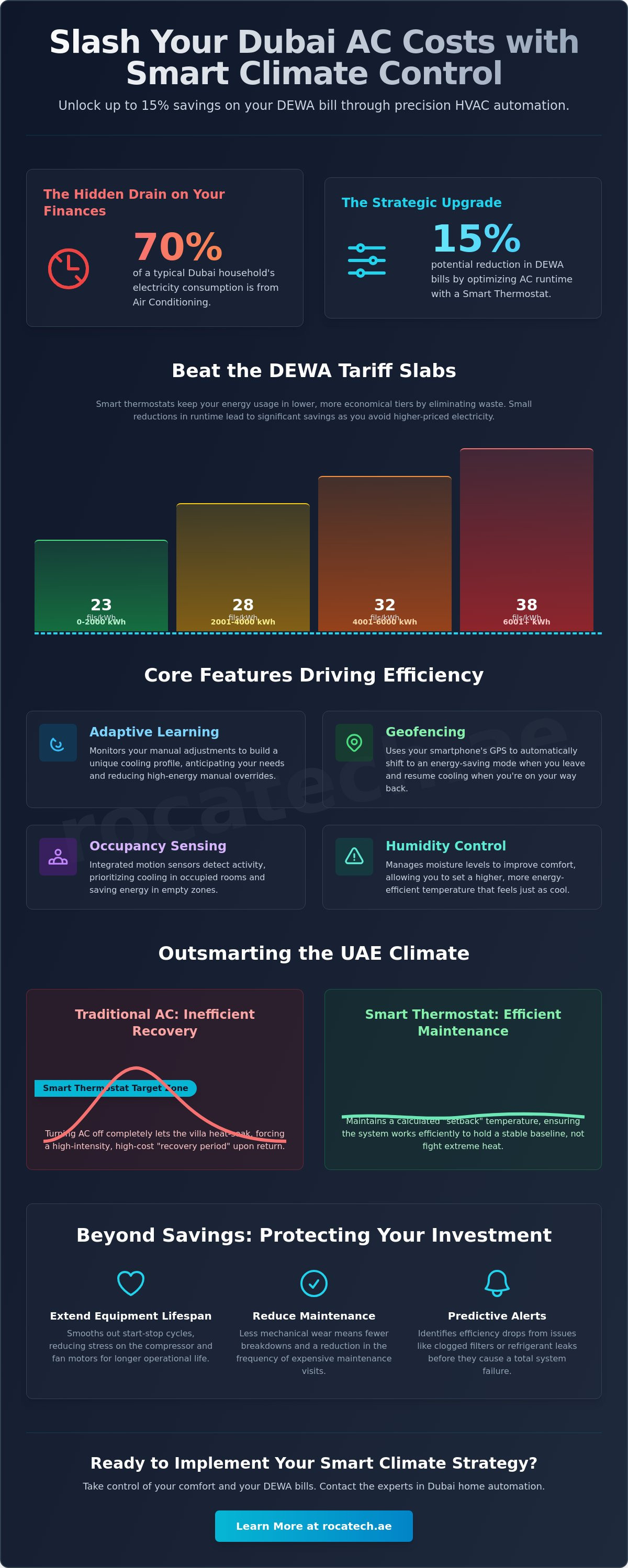
A smart thermostat is not merely a digital interface; it's an AI-driven HVAC controller that manages the thermal load of a property with surgical precision. By continuously monitoring internal and external variables, these devices optimize the compressor's duty cycle. This level of automation is essential in Dubai, where air conditioning typically accounts for up to 70% of a household's electricity consumption. Integrating a smart thermostat to save ac costs allows residents to move beyond manual adjustments that often lead to energy waste.
The financial benefit is directly tied to the Dubai Electricity and Water Authority (DEWA) residential tariff structure. As of June 2026, DEWA utilizes a slab-based system where costs increase as consumption rises. The current rates are structured as follows:
- 0-2000 kWh: 23 fils/kWh
- 2001-4000 kWh: 28 fils/kWh
- 4001-6000 kWh: 32 fils/kWh
- 6001+ kWh: 38 fils/kWh
Precision cooling helps keep your total usage in lower, more economical slabs. For a typical 3-bedroom villa in Dubai, a 15% reduction in AC runtime leads to substantial monthly savings on the base tariff, fuel surcharges, and the 5% VAT. Precision sensors also eliminate "over-cooling," a common issue where the system continues to run long after the desired comfort level is reached, causing unnecessary mechanical wear and expense.
Understanding Thermal Gain in the UAE Climate
External temperatures frequently exceeding 45°C create a massive thermal gradient. Traditional thermostats often struggle to respond to rapid heat gain through glass and masonry. Many residents make the mistake of turning the AC off entirely when leaving, which forces the system into a high-intensity "recovery period" upon their return. Smart algorithms instead maintain a calculated "setback" temperature. This ensures the system only works to maintain a stable baseline, which is far more efficient than cooling a heat-soaked villa from scratch during peak evening hours.
The Impact on Long-Term HVAC Health
Operational longevity is a secondary but vital economic benefit. Frequent start-stop cycles place immense stress on the compressor and fan motors. By smoothing out these cycles through intelligent modulation, smart automation extends the equipment's lifespan and reduces the frequency of expensive maintenance visits. These systems can also provide predictive alerts. They identify efficiency drops that suggest a clogged filter or a refrigerant leak before they escalate into a total system failure during the height of summer.
Core Features that Drive AC Cost Savings
Modern climate technology relies on more than simple on-off logic. To achieve real-world efficiency, a smart thermostat utilizes a suite of integrated sensors and logic-based processing. These systems analyze the specific thermal dynamics of your property to ensure that energy is never wasted on unoccupied spaces or over-cooled environments. Understanding The Economics of Cooling requires looking at how these features work in tandem to minimize compressor runtime without sacrificing the comfort levels required in the UAE.
Implementing a smart thermostat to save ac costs involves several key technological pillars:
- Adaptive Learning: The device monitors your manual adjustments over time to build a unique cooling profile. It eventually anticipates your needs, reducing the need for high-energy manual overrides.
- Geofencing: By utilizing your smartphone's GPS, the system recognizes when you leave areas like Oud Metha or Downtown. It automatically shifts to an energy-saving mode and initiates cooling only when you are within a specific radius of your villa.
- Occupancy Sensing: Integrated motion sensors detect activity in specific rooms. This allows the system to prioritize cooling in the living room during the day and the bedrooms at night, preventing the waste of energy in empty zones.
- Humidity Control: Dubai's humidity can make a room feel warmer than it actually is. These devices manage moisture levels, allowing for a higher temperature setpoint while maintaining the same perceived comfort level.
Advanced Scheduling and AI Optimization
Traditional 7-day programming is often too rigid for the dynamic lifestyles of Dubai residents. AI-driven systems adjust schedules in real-time based on your actual habits and external weather shifts. If a sudden sandstorm or humidity spike occurs, the system modifies its output to maintain stability. AI optimization in climate control is a method for preemptive cooling. This proactive approach ensures the system doesn't have to work at peak intensity to recover from a heat-soaked state.
Remote Management via Smart Hubs
Centralized control is a hallmark of a high-performing smart home. A smart hub gateway acts as the primary communication bridge for your thermostat; it allows for seamless integration with other sensors and voice assistants. This connectivity ensures you can manage multiple cooling zones from a single smartphone interface, regardless of your location. To see how these components integrate into a unified system, you can explore specialized hardware options at rocatech.ae to find a solution tailored to your specific villa layout.
The Synergy Effect: Multiplying Savings with Integrated Automation
The true potential of a smart thermostat to save ac costs is realized when it functions as part of a synchronized ecosystem rather than an isolated tool. In a high-performance home, the HVAC system shouldn't work against other environmental factors like sunlight or internal heat from appliances. This concept of Multiplying Savings with Integrated Automation relies on the exchange of real-time data between environmental sensors and mechanical controllers. When these systems communicate, they proactively manage the thermal load before the AC compressor is forced to engage at high intensity.
Establishing specific "Energy Scenes" is a primary method for achieving this harmony. For instance, an "Away" scene can be programmed to trigger when the smart door lock is engaged or when motion sensors detect no activity for a set period. This scene doesn't just adjust the thermostat; it can simultaneously close the smart curtain motors and dim the lights to ensure the villa remains as cool as possible with minimal mechanical intervention. Implementing Smart lighting control for your home in Dubai is a critical component of this strategy. LED systems managed by smart dimmers generate significantly less internal heat gain than traditional lighting left at full brightness, directly reducing the cooling demand on your HVAC unit.
Micro-zone cooling further refines this efficiency. By placing motion sensors in high-traffic areas, the system can prioritize airflow to the kitchen or home office only when they are occupied. This prevents the wasteful cooling of guest rooms or formal dining areas during daily routines, ensuring that every fils spent on your DEWA bill translates directly into personal comfort.
Smart Curtains and Solar Heat Gain
Solar heat gain through windows is one of the most significant challenges in the UAE. Automated curtains play a vital role here. Rocatech integrates smart curtain motors with the thermostat's ambient light sensors to close shades during peak sunlight hours, even if you aren't home. This proactive shielding prevents the "greenhouse effect" in south-facing rooms. By keeping the internal temperature stable through passive means, the smart thermostat doesn't have to trigger the AC as frequently, which preserves the equipment and lowers operational costs.
Whole-Home Efficiency Ecosystems
A comprehensive automation strategy addresses peripheral risks that impact AC efficiency. Linking water leak sensors to your system can provide early warnings for AC condensation drain blockages, a common issue in Dubai that can lead to water damage and system failure. Additionally, smart plugs can be used to monitor the energy draw of older, portable cooling units in outdoor spaces or garages. This data-driven approach provides a level of operational oversight that traditional homes lack. There's a significant psychological benefit to this level of automation. Knowing that your home is intelligently managing its own resources provides a sense of stability and reassurance for property managers and homeowners alike.
Compatibility and Installation in Dubai Properties
Successful deployment of a smart thermostat to save ac costs depends on a precise understanding of your building's HVAC architecture. Dubai's real estate landscape features a diverse mix of cooling infrastructures, ranging from independent villa units to complex district cooling networks. Unlike many international markets where 24V systems are standard, UAE properties often utilize 220-240V high-voltage wiring. Attempting a DIY installation with hardware designed for different regions can lead to system failure or electrical hazards. Ensuring your device is compatible with local voltage and control logic is the first step toward operational stability.
A significant technical hurdle in many Dubai apartments is the absence of a "C-wire" or common wire. This wire provides continuous power to the thermostat's Wi-Fi module and display. While some modern units offer power-extender kits, properties in older districts may require professional rewiring to support advanced automation. Furthermore, district cooling systems managed by providers like Empower or Emicool require specific integration protocols. These systems rely on motorized valves and fan coil units rather than standard compressors, making professional calibration essential for accurate energy tracking and cost reduction.
Evaluating Your Existing HVAC Setup
Identifying your specific system type is critical before procurement. Most high-rise developments by Emaar, Damac, and Sobha utilize Fan Coil Unit (FCU) systems. These units often feature multi-stage cooling, where the fan operates at varying speeds to maintain temperature. A smart thermostat must be able to communicate with these multiple stages to prevent the system from running at maximum capacity unnecessarily. If you are unsure of your current configuration, reviewing a comprehensive guide on Smart home installation Dubai can help you understand how these components interface within a modern integrated living environment.
The Professional Installation Advantage
Precision is the hallmark of a reliable automation system. Professional installers don't just mount a device; they calibrate external sensors to ensure ambient readings aren't skewed by heat-leaking windows or nearby appliances. This accuracy is vital for the adaptive learning features mentioned earlier in this guide. Integration experts also ensure that your thermostat maintains a stable connection with your local Wi-Fi network, which can be challenging in villas with thick reinforced concrete walls. Adhering to strict safety protocols for high-voltage wiring protects both your hardware investment and your property's electrical integrity. To ensure your system is configured for maximum efficiency and safety, you can consult with the technical experts at rocatech.ae for a professional assessment of your villa or apartment.
Implementing Your Smart Climate Strategy with Rocatech
Transitioning to a precision-cooled environment requires more than just hardware; it demands a strategic alignment of technology with your property's specific operational needs. Rocatech adopts a consultative partnership model to ensure that every smart thermostat to save ac costs is configured for maximum ROI. We analyze your villa's layout and occupancy patterns to provide a solution that balances technical reliability with long-term value. This methodical approach moves away from generic retail transactions toward a supportive relationship focused on your home's total efficiency.
Achieving system harmony involves integrating climate control with other critical home elements. When your thermostat, smart lighting control, and smart curtain motors operate within a unified ecosystem, the efficiency gains are compounded. This integrated approach ensures that your home isn't just "smart," but fundamentally optimized for the unique environmental challenges of the UAE. By centralizing management through a single interface, we provide the operational floor for a home that anticipates your needs while strictly managing energy consumption.
Personalized Energy Audits
Our process begins with identifying existing energy leaks that could undermine your new hardware's performance. Rocatech's technical experts conduct thorough assessments to pinpoint areas where thermal gain is highest, such as poorly insulated glass or inefficient ducting. This data allows us to create customized cooling schedules that reflect your family's actual routine rather than a generic template. For a deeper dive into these technical specifications, our Smart thermostat Dubai guide provides a comprehensive roadmap for precision cooling in 2026.
Ongoing Reliability and Support
The lifecycle of your smart home system extends far beyond the initial installation. We provide comprehensive user training to ensure you can manage your environment with confidence and precision. Our team handles critical firmware updates and performs regular system health checks to maintain peak efficiency. Local technical expertise is essential for navigating Dubai's specific infrastructure and ensuring your automation remains stable through every summer peak. If you're ready to move from high DEWA bills to a precision-managed home, you can Contact Rocatech for a precision smart home consultation to begin your transition toward a more sustainable and cost-effective lifestyle.
Optimizing Your Home’s Thermal Efficiency
Integrating advanced climate automation is a strategic investment in your property's operational health. By moving away from manual HVAC management, you ensure that every unit of energy consumed translates into measurable comfort. We've explored how precision sensors and adaptive learning algorithms manage thermal load effectively, helping you maintain a stable environment. These systems don't just lower bills; they provide the technical reliability needed to protect your HVAC hardware from the extreme UAE summer.
Implementing a smart thermostat to save ac costs is most effective when supported by expert configuration. Our Dubai-based expert installation team specializes in the technical nuances of district cooling integration and high-voltage UAE systems. We provide comprehensive smart home ecosystem support to ensure your lighting, curtains, and cooling work in perfect harmony. This holistic approach guarantees long-term value and operational stability for your villa or apartment. You can Book a Professional Smart Thermostat Installation in Dubai to begin your transition toward a more efficient, precision-cooled home. Take control of your utility expenses and enjoy the reassurance of a stable, automated living environment today.
Frequently Asked Questions
How much can a smart thermostat actually save on AC costs in Dubai?
Precision climate automation can reduce your DEWA bills by up to 15% through optimized compressor management. This efficiency is achieved by ensuring your cooling system only operates when necessary, which helps keep your total consumption within lower residential tariff slabs. Utilizing a smart thermostat to save ac costs is a proven method for eliminating the energy waste associated with manual cooling and over-cooled unoccupied rooms.
Is a smart thermostat compatible with district cooling like Emicool or Empower?
Smart thermostats are compatible with district cooling systems provided they are configured to manage Fan Coil Units (FCU). These systems operate differently than standard central AC because they control motorized valves and chilled water flow. Professional integration is essential to ensure the thermostat's software correctly interfaces with the building's specific cooling infrastructure for accurate temperature regulation.
Do I need a professional to install my smart thermostat in the UAE?
Professional installation is critical in the UAE because most properties utilize 220-240V high-voltage wiring. Many international smart devices are designed for 24V standards and require specialized transformers or relays to operate safely. An expert installer also ensures the presence of a C-wire for continuous power and calibrates sensors to account for the unique thermal gain of your villa or apartment.
Can I control my Dubai home AC while I am traveling abroad?
Will a smart thermostat work if my internet connection goes down?
The device will continue to function as a high-quality traditional thermostat if your Wi-Fi connection fails. It maintains your pre-set schedules and allows for manual temperature adjustments via the physical wall interface. While you will temporarily lose remote access and geofencing capabilities, the system's core cooling logic remains operational to protect your home from heat soak.
What is the difference between a programmable and a smart thermostat?
A programmable thermostat follows a rigid, time-based schedule that you must set manually. In contrast, a smart thermostat uses AI and adaptive learning to build a profile of your actual habits. By incorporating geofencing and motion sensors, a smart thermostat to save ac costs makes real-time adjustments that a simple timer cannot match, providing superior efficiency in the dynamic UAE climate.
Does a smart thermostat require a monthly subscription fee?
Most smart thermostats don't require a monthly subscription for their primary energy-saving and remote-control features. Once the hardware is installed and connected to your hub, the automation and scheduling tools are typically free to use. While some manufacturers offer optional premium tiers for advanced data analytics, these are not required for achieving significant reductions in your monthly utility expenses.
Can a smart thermostat help reduce humidity in my apartment?
Advanced smart thermostats include integrated humidity sensors that can trigger the AC system specifically for dehumidification. This feature is vital in Dubai's coastal environment where high moisture levels can make a room feel warmer than it is. By managing humidity, the system allows for a higher temperature setpoint while maintaining peak comfort, which directly reduces the load on your compressor.