

Smart Water Leak Sensor UAE: The 2026 Buying Guide for Property Protection

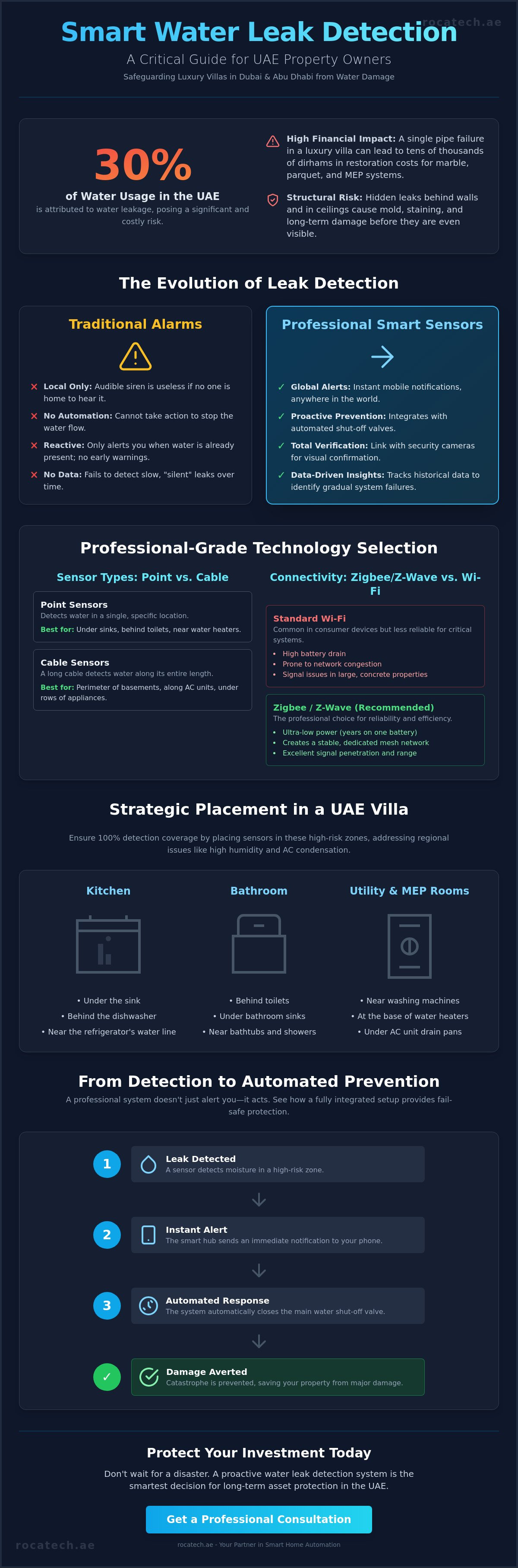
Did you know that water leakage accounts for approximately 30% of all water used in the UAE? For property owners in Dubai and Abu Dhabi, this isn't just a utility concern. It's a significant risk to luxury interiors and structural integrity. Whether it's an AC condensation drip damaging a ceiling or a pipe burst while you're traveling abroad, the financial impact is often severe. You likely recognize that reactive maintenance is no longer sufficient for high-stakes environments. Integrating a professional-grade smart water leak sensor uae into your property ensures you're alerted the moment moisture is detected, long before a minor drip becomes a catastrophe.
We'll show you how to select and deploy the most reliable detection technology to safeguard your investment. This guide explores the 2026 landscape of smart water leak sensors, focusing on 100% detection reliability and seamless integration with automated shut-off valves and a smart hub. You'll learn how to move beyond simple alerts toward a comprehensive system that provides instant mobile notifications anywhere in the world. We'll cover everything from technical specifications for villa owners to strategic placement that aligns with regional standards and DEWA recommendations.
Key Takeaways
- Understand the financial impact of water damage on luxury UAE properties and why proactive detection is a critical investment for long-term asset protection.
- Evaluate the technical differences between point and cable sensors to select the most effective smart water leak sensor uae for your specific villa layout.
- Discover why Zigbee and Z-Wave protocols, supported by a stable smart hub gateway, outperform standard Wi-Fi in high-stakes technical environments.
- Identify high-risk placement zones in kitchens and bathrooms to ensure your detection system captures hidden leaks before they cause structural damage.
- Learn how to integrate sensors with automated shut-off valves to create a fail-safe system that stops water flow the moment a leak is detected.
Why Every UAE Home Needs a Smart Water Leak Sensor
Water damage represents one of the most significant yet preventable risks to property ownership in the Emirates. In the context of a modern UAE smart home, a smart water leak sensor uae is more than a standalone gadget. It's a critical node in a sophisticated automation ecosystem designed to maintain operational stability. Unlike traditional moisture alarms that rely on audible sirens, these smart devices provide a digital handshake between your property's plumbing health and your mobile device, ensuring that distance never compromises your ability to respond to an emergency.
The hidden costs of water damage in Dubai are often underestimated until a failure occurs. Luxury finishes such as Italian marble, custom parquet flooring, and high-end MEP (Mechanical, Electrical, and Plumbing) systems are particularly vulnerable. A single pipe failure can lead to tens of thousands of dirhams in restoration costs, not to mention the logistical headache of coordinating specialized repairs in a premium villa. By implementing a professional detection system, you transition from a reactive maintenance posture to a proactive one, protecting the long-term value of your real estate assets.
Primary risk factors in the region are unique and require specific technical attention. The UAE's high ambient humidity places an immense load on air conditioning systems, often leading to blocked drainage trays and subsequent ceiling damage. Additionally, high-pressure municipal water lines and aging water heater tanks in older developments create a constant baseline of risk. For residents who travel internationally, the psychological benefit of this technology is immense. Knowing that your property is monitored provides a level of reassurance that manual inspections simply cannot match.
The Reality of Water Damage in the UAE
In many Emaar and Nakheel villas, complex plumbing networks are concealed within wall cavities and ceiling voids. This architectural design makes it difficult to spot a leak until it has already caused structural staining or mold growth. High humidity levels accelerate AC condensation issues, where even a small blockage in a drainage pipe can result in a significant overflow within hours. When you compare the cost of a burst pipe repair to the modest investment in a sensor, the decision becomes a matter of basic operational logic. A single sensor can prevent a catastrophe that might otherwise require a complete flooring replacement.
How Smart Sensors Outperform Traditional Alarms
Traditional water detectors are limited by their local range. If no one is home to hear the alarm, the damage continues unabated. Professional systems integrated through Rocatech-compatible apps offer real-time mobile notifications that reach you anywhere in the world. Understanding how water leak detectors work is essential for property managers who require absolute precision in moisture sensing. These systems use electrical conductivity or ultrasonic waves to identify the presence of water instantly.
For total verification, you can integrate these sensors with a home security camera. If an alert is triggered, you don't have to guess the severity; you can visually inspect the area through your smartphone. Furthermore, these smart systems track historical data, allowing you to identify slow, "silent" leaks that might not trigger a flood alarm but could indicate a gradual system failure over time.
Technical Specifications: Choosing the Right Sensor Technology
Selecting the right smart water leak sensor uae requires a technical understanding of how different hardware configurations respond to specific environmental stressors. In the high-stakes environment of a Dubai villa, reliability is the only metric that matters. This begins with the choice of communication protocol. While Wi-Fi is common in entry-level consumer devices, professional-grade systems prioritize Zigbee or Z-Wave. These low-power protocols ensure that sensors remain connected for years on a single battery, avoiding the high energy drain and potential interference issues associated with standard Wi-Fi networks in large, concrete-heavy properties.
Durability is equally vital. Given the high humidity levels found in MEP closets and laundry rooms, sensors must feature high IP (Ingress Protection) ratings. Look for devices with gold-plated probes. These are essential for preventing corrosion, ensuring that the sensor remains conductive and responsive even after months of exposure to damp conditions. Effectively addressing common sources of household leaks involves more than just detection; it requires the right equipment for the right location.
Point Sensors for Targeted Protection
Point sensors are the standard for localized monitoring. They are best suited for environments where water is likely to pool in a specific, predictable spot. These compact units are ideal for placement under kitchen sinks, behind toilets, or adjacent to washing machines. Because they are often visible in luxury interiors, modern designs favor a minimalist aesthetic that blends with premium cabinetry. When selecting a point sensor, ensure the probes are positioned at the very base of the unit to detect even the thinnest film of moisture before it saturates the subfloor.
Cable Sensors for Perimeter Security
Cable sensors offer a different operational advantage by providing 360-degree coverage over a larger surface area. Instead of waiting for water to reach a specific point, the entire length of the cable acts as a sensing element. This is the preferred solution for high-risk zones where leaks are unpredictable. Consider these specific applications:
- Water Heaters: Wrap the base of the tank to catch leaks from any direction before they reach the hallway.
- AC Drip Trays: Line the perimeter of ceiling-mounted units to detect condensation overflows early.
- Utility Rooms: Run cables along the baseboards of large rooms housing multiple appliances for total floor coverage.
Many professional systems allow for daisy-chaining multiple cables, providing a scalable security perimeter for complex utility zones. If you're unsure which configuration suits your MEP layout, consult with our technical team to review your specific floor plan and requirements.
Essential Features of a Professional Smart Water Leak Sensor
A professional-grade smart water leak sensor uae must offer more than basic moisture detection; it needs to function as a fail-safe component within your building management strategy. While entry-level devices often focus solely on the sensor probe, a high-stakes environment requires a broader feature set to guarantee operational continuity. This includes high-decibel audible alarms that alert onsite residents or security staff immediately, even if their mobile devices are out of reach. Additionally, integrated temperature sensors provide a secondary layer of protection by identifying the thermal fluctuations that often precede AC drainage failures or water heater malfunctions.
The urgency of these features is underscored by U.S. Environmental Protection Agency statistics, which suggest that even minor leaks can waste significant amounts of water annually. In the UAE, where water is a precious resource and property finishes are of premium quality, the ability to detect these issues early is both financially and environmentally imperative. Moving beyond simple detection, professional systems prioritize app-based management that allows for multi-user access, ensuring that your maintenance team or property manager is notified at the same time you are.
Connectivity and Hub Integration
Central to this reliability is the use of a smart hub gateway. Unlike standalone sensors that connect directly to your router, a dedicated hub manages the communication traffic locally. This ensures that even if your external internet connection fails, the local automation logic remains fully functional. Standalone Wi-Fi sensors are notoriously prone to failure during router reboots or network congestion. In a professional configuration, local processing architecture minimizes response times and prevents the "offline" status common in consumer-grade hardware. By 2026, compatibility with global standards like Matter and Thread has become the benchmark for ensuring your sensors work seamlessly across diverse automation platforms.
Notification and Alert Systems
Modern notification systems are designed to ensure that no alert goes unnoticed. Professional systems utilize critical alerts that can bypass "Do Not Disturb" settings on both iOS and Android devices, which is vital for middle-of-the-night emergencies. Automated SMS and email backups serve as secondary security layers if data connectivity is weak. Furthermore, the system must provide proactive battery level alerts. This ensures 24/7 operational readiness by eliminating the risk of a sensor being offline due to power depletion at the exact moment a leak occurs. These layers of redundancy transform a simple gadget into a dependable security asset.
Strategic Placement: A Guide for Dubai Property Owners
Strategic deployment is the bridge between owning a device and achieving genuine property security. In Dubai’s luxury residences, the architectural layout often conceals the most vulnerable plumbing and HVAC points. A smart water leak sensor uae must be positioned where water first escapes, not where it eventually pools. In the kitchen, this means placing units directly under dishwashers and RO filtration systems. These appliances are notorious for slow, pressurized leaks that can warp custom cabinetry for weeks before moisture becomes visible on the floor surface.
Bathrooms require a similarly surgical approach. Hidden voids behind vanity units and the areas surrounding built-in bathtubs are primary targets for detection hardware. In high-rise apartments, a bathroom leak often goes unnoticed by the resident until the neighbor below reports ceiling damage. By placing sensors in these concealed zones, you establish an early warning system that protects your liability and your neighbor’s property. Laundry rooms also demand attention; the high-vibration environment of modern washing machines can gradually loosen threaded connections, turning a secure fitting into a source of moisture over time.
The AC Maintenance Checklist
The most overlooked risk in the UAE is the ceiling-mounted AC unit. Condensation management is a constant operational challenge in the desert climate, where high humidity levels test drainage systems daily. To mitigate this risk, sensors should be placed in secondary drain trays to catch overflows caused by p-trap blockages or pump failures. A sophisticated setup doesn't just alert you; it uses the detection event to trigger an immediate shutdown of the AC unit via a smart thermostat. This stops the production of condensation instantly, preventing a minor blockage from turning into a major ceiling collapse.
Protecting the Utility Room
For larger villas, the utility room or pump room is the heart of the property's MEP system. Monitoring the pressure relief valves on water heaters is essential, as these components often fail silently, leading to steady water loss. Main water inlet points and booster pumps should also be part of your sensor network to ensure total coverage. For a truly holistic approach, linking these sensors with a professional smart home installation dubai ensures that every high-risk zone is monitored through a single, unified interface. This integration allows for complex automation routines that protect the entire lifecycle of your home's infrastructure.
To ensure your property is fully protected against these specific UAE risks, view our professional sensor range and start building your custom detection network today.
Professional Integration: Moving from Detection to Prevention
Detection is the fundamental first step, but genuine property protection is achieved only through automated prevention. While a smart water leak sensor uae provides the critical data needed to identify a crisis, the true value of a professional system lies in its ability to act without human intervention. In high-stakes environments where every second translates to liters of water damaging luxury finishes, relying on a manual response is a significant risk. Professional integration involves connecting your sensors to smart solenoid valves at the main water inlet. This setup ensures that the moment moisture is detected, the water supply is terminated at the source, neutralizing the threat before the first notification even reaches your smartphone.
Custom automation scenes allow you to define exactly how your property reacts to specific failure points. For example, a leak detected in the laundry room can trigger an immediate power cut to the washing machine via a smart plug while simultaneously closing the main water valve. This multi-layered approach addresses both the source and the consequence of the failure. For property owners, this level of system harmony provides a psychological reassurance that simple notifications cannot match. It transforms your home into a self-protecting asset that maintains its operational integrity even when you are thousands of miles away.
Automated Water Shut-Off Systems
A professional shut-off system can close the main water valve in under five seconds. This rapid response is vital for preventing the saturation of subfloors and expensive parquet or marble. Technical precision is required during the installation of these valves to prevent "water hammer," a pressure surge that can stress plumbing joints if a valve closes too abruptly. High-quality smart valves utilize a controlled, gradual closure mechanism to maintain the integrity of your pipes. We also prioritize the inclusion of manual override features. This allows household staff or maintenance teams to manage the water supply during routine tasks without needing access to the primary automation interface.
Why Rocatech is Your Partner in Precision
Achieving 100% reliability in a smart home ecosystem requires expert calibration and rigorous signal testing. In the UAE, the prevalence of thick masonry and reinforced concrete often hampers wireless signal strength. Our approach to rocatech dubai automation focuses on ensuring that every node in your network has a redundant and stable connection to the central hub. We move away from basic hardware sales toward a consultative partnership that prioritizes the entire lifecycle of your property's protection. This includes ongoing system health checks to ensure your sensors and valves remain in peak operational condition.
A leak-proof home is the result of strategic technical planning and excellence in execution. If you are ready to secure your villa or apartment with the most advanced detection and prevention technology available in 2026, our team is ready to assist. Contact us to schedule a technical consultation and review your property’s MEP layout for a fail-safe protection system.
Securing Your Property’s Future with Intelligent Detection
Maintaining the structural integrity of a premium property requires more than high-end aesthetics; it demands a resilient technical foundation. We've established that selecting a professional smart water leak sensor uae and integrating it with a robust gateway ensures your home remains monitored regardless of your global location. By prioritizing strategic placement in high-risk zones like AC voids and utility rooms, you effectively neutralize the most common causes of water damage before they escalate into costly repairs.
The transition from simple detection to automated prevention is what separates a basic gadget from a comprehensive security system. Implementing automated shut-off valves provides a critical layer of protection, ensuring water flow stops the moment moisture is identified. Rocatech offers the technical precision required for these high-stakes environments, providing Dubai-based expert installation and seamless integration with premium smart home ecosystems. Our systems are designed for long-term stability and offer reliable remote monitoring support for absolute peace of mind.
Protect your property with a professional leak detection system from Rocatech and ensure your investment is shielded by the most reliable technology available today. Your property deserves the precision of a professional automation partner.
Frequently Asked Questions
Do smart water leak sensors work without Wi-Fi?
Professional sensors utilizing Zigbee or Z-Wave protocols communicate locally with a smart hub gateway without relying on Wi-Fi. This architecture ensures that local automation, such as triggering a shut-off valve, remains functional even if your router fails. However, an active internet connection is necessary for the hub to transmit remote notifications to your smartphone while you're away from the property.
How long do the batteries last in a typical leak sensor?
Batteries in a high-quality smart water leak sensor uae typically last between two and five years. These devices utilize low-power communication protocols that remain in a standby state until moisture is detected. You'll receive automated low-battery notifications through your management app well before the power level reaches a critical point, ensuring the system remains operational 24/7.
Can one sensor cover an entire kitchen or laundry room?
A single point sensor is designed for targeted detection in one specific high-risk spot, such as under a sink or dishwasher. To protect an entire kitchen or laundry room, it's more effective to use multiple point sensors or a single cable sensor along the room's perimeter. This approach ensures moisture is detected immediately regardless of where the plumbing failure originates.
Will a smart leak sensor alert me if I am outside the UAE?
You'll receive instant mobile alerts anywhere in the world as long as your smartphone has an active data connection. The smart hub gateway at your Dubai or Abu Dhabi property transmits the detection event to the cloud, which then pushes the notification to your device. This global connectivity provides essential peace of mind for residents during international travel or summer holidays.
Can these sensors detect humidity or only liquid water?
Most standard sensors are designed specifically to detect liquid water through electrical conductivity probes. However, professional models often include secondary sensors for temperature and humidity monitoring. These additional technical specifications are particularly useful in the UAE for identifying AC drainage issues or environmental shifts that may indicate a hidden leak before liquid water actually pools.
Is professional installation required for water leak sensors?
While individual sensors are often simple to place, professional installation is recommended for comprehensive system integration. An expert ensures that each smart water leak sensor uae is correctly calibrated and that signal strength is verified through thick masonry or reinforced concrete walls. Professional setup is also essential for safely integrating detection hardware with automated main water shut-off valves.
What happens if the sensor gets submerged in a major flood?
High-quality sensors feature IP ratings that provide resistance to temporary submersion, but they aren't designed for permanent underwater operation. If a sensor is fully submerged during a major plumbing failure, its internal circuitry may eventually suffer from corrosion. It's standard operational procedure to inspect and typically replace any sensor after a significant flood event to maintain system reliability.
Can I integrate my leak sensors with my existing Google Home or Alexa?
Most professional leak detection systems are compatible with Google Home and Amazon Alexa when connected through a supported smart hub gateway. This integration allows you to monitor sensor status via voice commands and include moisture detection within broader automation routines. It ensures your water protection strategy works in total harmony with your existing smart lighting or security camera systems.