

How to Lower Your DEWA Bill with a Smart AC Thermostat in 2026

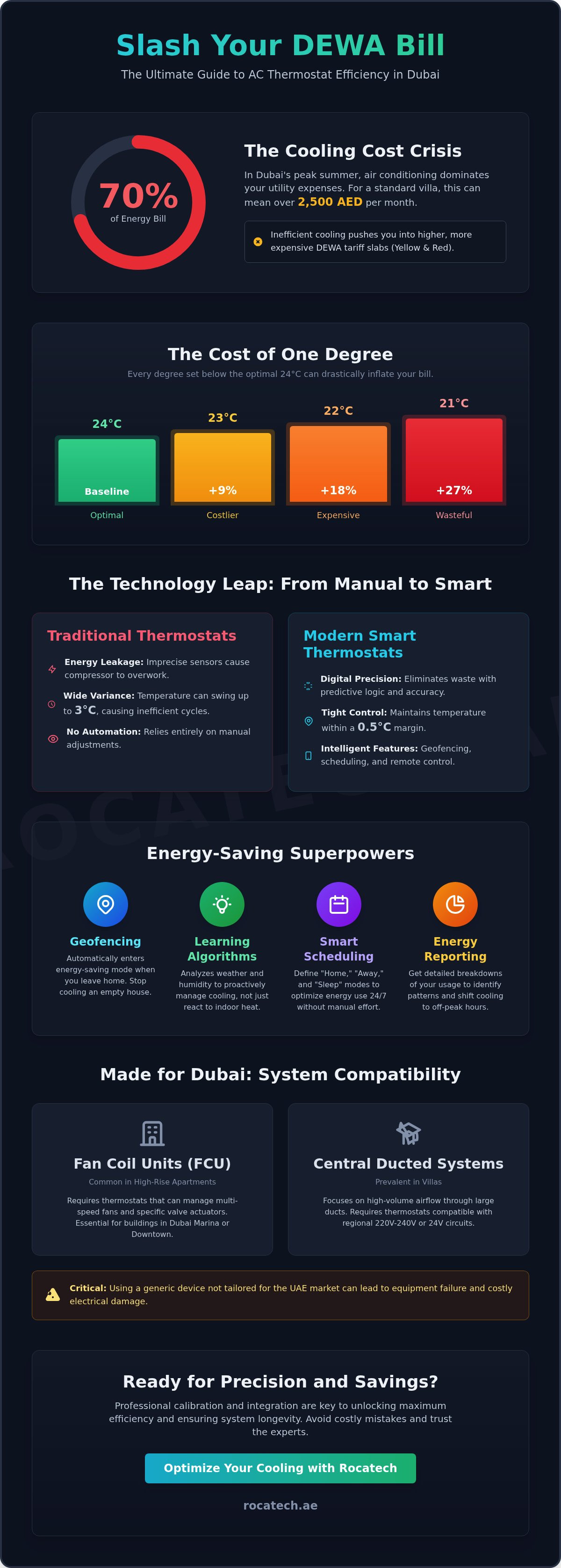
Did you know that air conditioning systems account for approximately 70% of a typical Dubai residential electricity bill during the peak summer season? It's a common challenge for residents across the UAE to balance the necessity of a cool interior with the reality of escalating utility costs. You likely agree that paying over 2,500 AED monthly for a standard villa just to maintain comfort feels like an inefficient use of your resources. This article demonstrates how a modern, professionally integrated ac thermostat provides the precision cooling control necessary to slash your DEWA expenses without compromising your home environment.
We'll examine the specific technical requirements for local HVAC systems, the benefits of remote thermal management, and how professional calibration ensures your equipment remains robust for years to come. By the end of this guide, you'll understand how to achieve a more efficient home that offers both financial savings and total peace of mind through technological excellence.
Key Takeaways
- Understand why the thermostat serves as the central intelligence of your HVAC system and its critical role in managing Dubai’s cooling demands.
- Discover how upgrading to a precision-engineered ac thermostat eliminates temperature variance and leverages geofencing to optimize energy consumption.
- Learn why 24°C is the optimal set point for DEWA efficiency and how to implement a 4-period schedule tailored to the UAE lifestyle.
- Identify the specific hardware requirements and technical standards necessary for a robust cooling solution in the United Arab Emirates market.
- Realize the importance of professional calibration and integration to ensure seamless system performance and avoid costly electrical failures.
What is an AC Thermostat and Why is it Critical in Dubai?
The ac thermostat acts as the primary intelligence center for any HVAC system. It regulates your indoor climate by monitoring ambient air and triggering cooling cycles to maintain a specific "set point." In the United Arab Emirates, where summer temperatures frequently peak above 50°C, the precision of this device determines the difference between a comfortable home and an astronomical utility bill. Traditional manual dials often suffer from "energy leakage," a phenomenon where imprecise sensors cause the compressor to overwork due to delayed shut-off signals. Modern solutions, particularly the Smart thermostat, eliminate this waste through digital accuracy and predictive logic. This technological shift is no longer a luxury in 2026; it's a financial necessity for Dubai residents seeking long-term value.
The Direct Impact on Your DEWA Bill
Cooling accounts for approximately 70% of total energy consumption in UAE households. Regional energy data indicates that every degree set below 24°C can increase your monthly bill by 9%. For a standard three-bedroom villa, this translates to hundreds of AED in avoidable costs every month. DEWA utilizes a slab tariff system where higher consumption triggers more expensive rates per kilowatt-hour. If your cooling system runs inefficiently, it's easy to jump from the lower "Green" slab into the more expensive "Yellow" or "Red" brackets. Precise control ensures you stay within the most economical consumption tiers, providing immediate relief to your monthly overheads.
Understanding Local HVAC Systems: FCU vs. Central AC
Dubai's real estate landscape features diverse cooling architectures that require specific hardware configurations. You'll find two primary systems:
- Fan Coil Units (FCU): These are common in high-rise apartments like those in Dubai Marina or Downtown. They often require thermostats capable of managing multi-speed fans and specific valve actuators.
- Central Ducted Systems: Prevalent in expansive villas in Al Barsha or Jumeirah, these systems focus on high-volume airflow through large duct networks.
You can't simply install any generic device. The hardware must be compatible with regional 220V-240V wiring or specific 24V control circuits found in UAE builds. Using a device tailored for the local market prevents equipment failure and ensures the compressor operates within its designed efficiency range. Reliability is paramount when the outdoor heat becomes a safety risk.
How Modern AC Thermostats Reduce Energy Consumption
Traditional mechanical thermostats often suffer from a significant hysteresis effect, resulting in a temperature variance of up to 3 degrees Celsius. This lack of precision causes the HVAC system to cycle on and off frequently, leading to inefficient energy spikes and increased wear on the compressor. A modern ac thermostat utilizes digital precision sensing to maintain your desired set point within a 0.5-degree margin. This technical stability ensures the system operates at a steady, efficient rate rather than constantly "hunting" for the correct temperature.
Geofencing technology adds another layer of automated efficiency. By utilizing the GPS on your smartphone, the system identifies when you leave a designated perimeter around your property. It automatically shifts into an energy-saving mode, ensuring you aren't cooling an empty house. Data indicates that ENERGY STAR certified smart thermostats provide a reliable framework for these savings, helping users reduce cooling costs by approximately 8% annually through these intelligent setbacks.
Learning algorithms and AI now analyze external environmental factors, such as the high humidity levels common in the UAE. Instead of reacting only to indoor heat, the system predicts the cooling load required based on outdoor conditions. This proactive approach is paired with detailed energy reporting. These reports break down consumption by the hour, allowing you to identify if your peak usage coincides with the highest DEWA tariff periods. You can then adjust your behavior or automate the system to shift heavy cooling to off-peak hours.
The Power of Scheduling and Automation
Automation eliminates the human error associated with manual adjustments. By defining "Away," "Home," and "Sleep" modes, the system optimizes energy 24/7 without intervention. Pre-cooling is a vital strategy in this cycle. It gradually lowers the temperature before you arrive home, preventing the high-amperage "surge" cooling that occurs when a system tries to drop the indoor temperature by 5 degrees in a single hour. Integrated humidity sensors also manage moisture levels to prevent mold, keeping the air quality high without forcing the compressor to run at maximum power constantly.
Remote Access and App Integration
The ability to control your climate via a dedicated app provides a psychological benefit of peace of mind. You no longer have to worry if the AC was left running at 18 degrees while you are at the office or traveling. For those seeking a total solution, integrating the device with a smart hub gateway enables whole-home scenes. This allows the thermostat to work in tandem with smart blinds and lighting. Voice control via Alexa or Google Home further simplifies precision adjustments, ensuring your home remains a high-performance environment. To ensure your system is calibrated for maximum efficiency, you might consider a professional consultation to evaluate your current HVAC integration.
Choosing the Best AC Thermostat for Your Dubai Property
Selecting the right hardware for a Dubai residence requires more than just looking at a feature list. The local environment presents unique challenges, specifically the sustained ambient temperatures that often exceed 45°C during the summer months. An ac thermostat must be robust enough to handle high-frequency cycling without hardware degradation. When evaluating options, prioritize devices that offer local warranty support within the UAE. Cooling is a critical utility in the Middle East; a 24-hour failure in July is a significant risk to property and comfort. High-performance models typically require an initial investment between AED 700 and AED 1,200, but they offer a superior return on investment compared to budget alternatives. Data indicates that ENERGY STAR-certified smart thermostats can reduce cooling costs by approximately 8% to 15% annually, allowing the device to pay for itself within 14 months of installation.
Top Smart Thermostat Models in 2026
In 2026, three manufacturers dominate the UAE market due to their integration capabilities and hardware reliability:
- Google Nest: This remains the market leader for residential properties in Dubai Marina and Downtown. Its intuitive learning algorithms adapt to your schedule, automatically adjusting setpoints when the home is empty.
- Honeywell Home: Rocatech recommends Honeywell for large villas in Emirates Hills or Jumeirah. These units offer industrial-grade reliability and are designed to withstand the heavy load of large-scale HVAC systems.
- Ecobee: This is the optimal choice for sprawling properties. Its remote sensors detect hot spots in specific rooms, ensuring the ac thermostat maintains a consistent temperature across multiple zones.
Compatibility and Wiring Constraints
Technical integration is the most common hurdle for Dubai homeowners. Many older properties in areas like Al Safa or Jumeirah use high-voltage systems (220V), while most international smart models are designed for low-voltage (24V) circuits. You must verify if your Fan Coil Unit (FCU) or central plant system is compatible before purchase. The "C-Wire" or common wire is another frequent requirement; it provides continuous power to the device's WiFi radio and screen. If your current wall plate lacks this wire, a professional technician must perform a wiring modification to ensure stability. For a deeper technical breakdown of these systems, check our guide on smart thermostat basics to understand the underlying infrastructure of modern home automation.
Choosing a device with a sleek aesthetic is a priority for many luxury Dubai properties, but design shouldn't compromise precision. A high-quality unit provides temperature readings accurate to within 0.5°C. This precision prevents the "hunting" effect where the compressor turns on and off too frequently, which is a primary cause of high DEWA bills. Investing in a premium model ensures you have the technical support needed to maintain these standards over the long term.
5 Steps to Optimize Your Thermostat for Maximum Savings
Achieving peak efficiency requires more than just installing hardware. It demands a structured approach to configuration. Follow these five steps to ensure your ac thermostat delivers the 20% to 30% reduction in cooling costs typical of optimized systems in the UAE.
- Set the "Goldilocks" Temperature: DEWA identifies 24°C as the optimal setpoint for residential cooling. Every degree lower can increase your energy consumption by up to 9%. Keeping the system at 24°C maintains comfort while preventing the compressor from overworking.
- Implement a 4-Period Schedule: Align your cooling with the Dubai lifestyle by programming "Wake," "Away," "Home," and "Sleep" periods. This ensures you aren't cooling an empty house during work hours while maintaining a baseline temperature that prevents heat buildup.
- Calibrate Your Sensors: Internal sensors can be misled by "hot spots" near windows or kitchen appliances. Position remote sensors in high-traffic areas to provide the ac thermostat with an accurate average temperature of your living space, preventing unnecessary cooling cycles.
- Select "Auto Fan" Mode: Using the "Fan On" setting keeps the blower running continuously, which wastes electricity and increases humidity. The "Auto" setting ensures the motor only operates during a cooling cycle, extending the lifecycle of your equipment and reducing mechanical wear.
- Analyze Monthly Energy Reports: Use your smart app to review consumption peaks. Identifying why your usage spiked on a specific Tuesday allows for precise adjustments to your scheduling logic, turning raw data into actionable savings.
The "Away Mode" Strategy
Turning your AC completely off while at the office is a common mistake. In Dubai’s high humidity, stagnant air leads to mold growth and "heat soak," where walls and furniture absorb thermal energy. A better approach is an 8-degree setback. If your home is usually 24°C, set it to 32°C while away. This prevents the system from struggling for hours to recover when you return. Modern geofencing features can detect your smartphone's location, cooling the home exactly 10 minutes before you walk through the door.
Seasonal Adjustments for Dubai
Your cooling strategy must evolve with the UAE's climate. During the winter months from December to February, you can often transition to "Fan Only" modes or higher setpoints of 26°C. However, during the summer peak from June to August, the focus shifts to aggressive scheduling and ensuring the compressor doesn't cycle too frequently. Smart systems also provide proactive maintenance alerts. These notifications remind you to clean filters every 30 days, a simple task that maintains airflow and prevents a 5% to 15% drop in system efficiency.
For professional guidance on integrating high-precision cooling controls into your property, explore our tailored automation solutions to secure long-term energy stability.
Professional Installation: Ensuring Precision with Rocatech
Installing a modern ac thermostat often appears to be a straightforward weekend task, yet it frequently results in costly technical failures. Data from local HVAC maintenance providers indicates that roughly 15% of DIY smart thermostat attempts lead to short-circuited control boards. Replacing these damaged boards can cost upwards of AED 1,200, which immediately negates any potential DEWA savings. Rocatech eliminates this risk by treating installation as a high-precision engineering task rather than a simple hardware swap.
Our technicians focus on electrical integrity and system calibration. We ensure that your cooling equipment operates within manufacturer specifications while communicating perfectly with your home network. This professional approach provides the "hassle-free" experience that plant managers and homeowners require in the demanding Dubai climate. By choosing professional integration, you protect your HVAC investment and ensure the device actually delivers the energy efficiency it promises.
The Rocatech Integration Process
Every project begins with a technical consultation to assess your existing HVAC infrastructure and specific DEWA reduction targets. This ensures the hardware is compatible with local wiring standards. Our smart home installation Dubai service covers the entire deployment lifecycle, from physical wiring to software configuration. We don't just leave once the screen lights up. Our team provides comprehensive user training, showing you exactly how to program schedules and interpret energy reports to maximize your monthly savings.
Long-Term Support and Peace of Mind
Reliability is the cornerstone of our service model. We provide dedicated on-site support to handle any troubleshooting or system recalibrations required as your home evolves. Our solutions are designed for scalability; you can easily expand your ecosystem by adding automated lighting or security sensors to the same control hub. This holistic approach ensures your ac thermostat remains a functional part of a larger, efficient environment. We act as your dependable ally, maintaining the stability of your home automation systems so you can focus on your daily operations without interruption.
If you're ready to optimize your home's cooling efficiency with professional oversight, Contact Rocatech today for a precision cooling consultation. Our experts are ready to help you reduce your energy footprint with reliable, high-performance technology.
Achieve Precision Cooling and Sustainable Energy Savings
Optimizing your property's climate control is a strategic investment in long-term operational efficiency. By deploying a modern ac thermostat, you transition from manual temperature adjustments to a data-driven cooling strategy that directly impacts your monthly DEWA statements. These advanced systems provide the granular control needed to manage Dubai's extreme temperatures while eliminating unnecessary energy waste. It's a proven method to enhance indoor comfort without inflating utility costs.
Successful integration requires more than just high-end hardware. Rocatech brings over 5 years of local Dubai expertise to every project, specializing in the specific complexities of UAE HVAC wiring such as FCU and VAV systems. We ensure your devices function within a comprehensive smart home ecosystem for seamless performance and technical reliability. Our consultative approach focuses on the entire lifecycle of your cooling infrastructure to provide total peace of mind for your household.
Optimize your home cooling with Rocatech’s expert installation services.
You can start transforming your living environment into a model of modern efficiency today.
Frequently Asked Questions
Can a smart AC thermostat really lower my DEWA bill?
Yes, installing a smart ac thermostat can reduce your cooling costs by 10% to 15% annually according to energy efficiency benchmarks. These devices utilize precision algorithms to eliminate unnecessary cooling cycles when you're away from home. By optimizing compressor runtimes, you reduce total kilowatt-hour consumption, which directly lowers your monthly DEWA utility charges.
Will a Nest or Ecobee thermostat work with my AC in Dubai?
Compatibility depends on your specific HVAC wiring, as many Dubai properties utilize 220V high-voltage systems while these brands often require 24V low-voltage connections. You'll likely need a step-down transformer or a specialized adapter to ensure a stable installation. It's essential to verify your system's wiring configuration before purchase to prevent hardware damage or electrical faults.
Is it safe to install a smart thermostat myself in a Dubai apartment?
Self-installation isn't recommended for most residents due to the technical complexities of UAE electrical standards. Improperly handling 220V wiring poses a 100% risk of short-circuiting your HVAC control board or causing personal injury. Professional integration ensures that the ac thermostat is calibrated correctly and complies with local building safety regulations for long-term reliability.
What is the best temperature to set my AC to in Dubai to save money?
Setting your thermostat to 24°C is the optimal balance for energy conservation in the United Arab Emirates. DEWA experts state that every degree you set below 24°C increases your cooling energy consumption by 6% to 9%. Keeping your home at this steady temperature prevents the system from overworking during peak afternoon heat when ambient temperatures exceed 45°C.
Do I need a stable Wi-Fi connection for my AC thermostat to work?
Your AC will continue to cool your home based on its last programmed schedule even if your Wi-Fi disconnects. However, you'll lose access to remote adjustments, real-time energy monitoring, and automated geofencing features until the connection is restored. Most modern units require a 2.4GHz frequency band to maintain a consistent link with their dedicated mobile applications.
How much does professional thermostat installation cost in Dubai?
Professional installation services in Dubai typically range from 200 AED to 500 AED per unit depending on the complexity of the wiring. This fee generally covers the physical mounting, electrical conversion if required, and initial software configuration. Investing in expert setup provides a hassle-free experience and ensures your cooling system's warranty remains intact.
Can I control my Dubai home AC while I am traveling abroad?
You can manage your home climate from anywhere in the world as long as your device is connected to the internet. This capability is vital for Dubai residents who travel during the summer months; it allows you to maintain a 27°C baseline to prevent humidity buildup and mold growth. This proactive monitoring offers significant peace of mind during extended absences.
What happens to my thermostat settings if there is a power cut?
Most advanced thermostats feature non-volatile memory that preserves your schedules and preferences during a power outage. Once electricity is restored, the device automatically reboots and reconnects to your home network within 2 to 3 minutes. This robust design ensures your cooling parameters remain consistent without requiring manual intervention after a grid failure.