

Energy Saving Smart Home Dubai: The 2026 Buyer’s Guide to Lower DEWA Bills

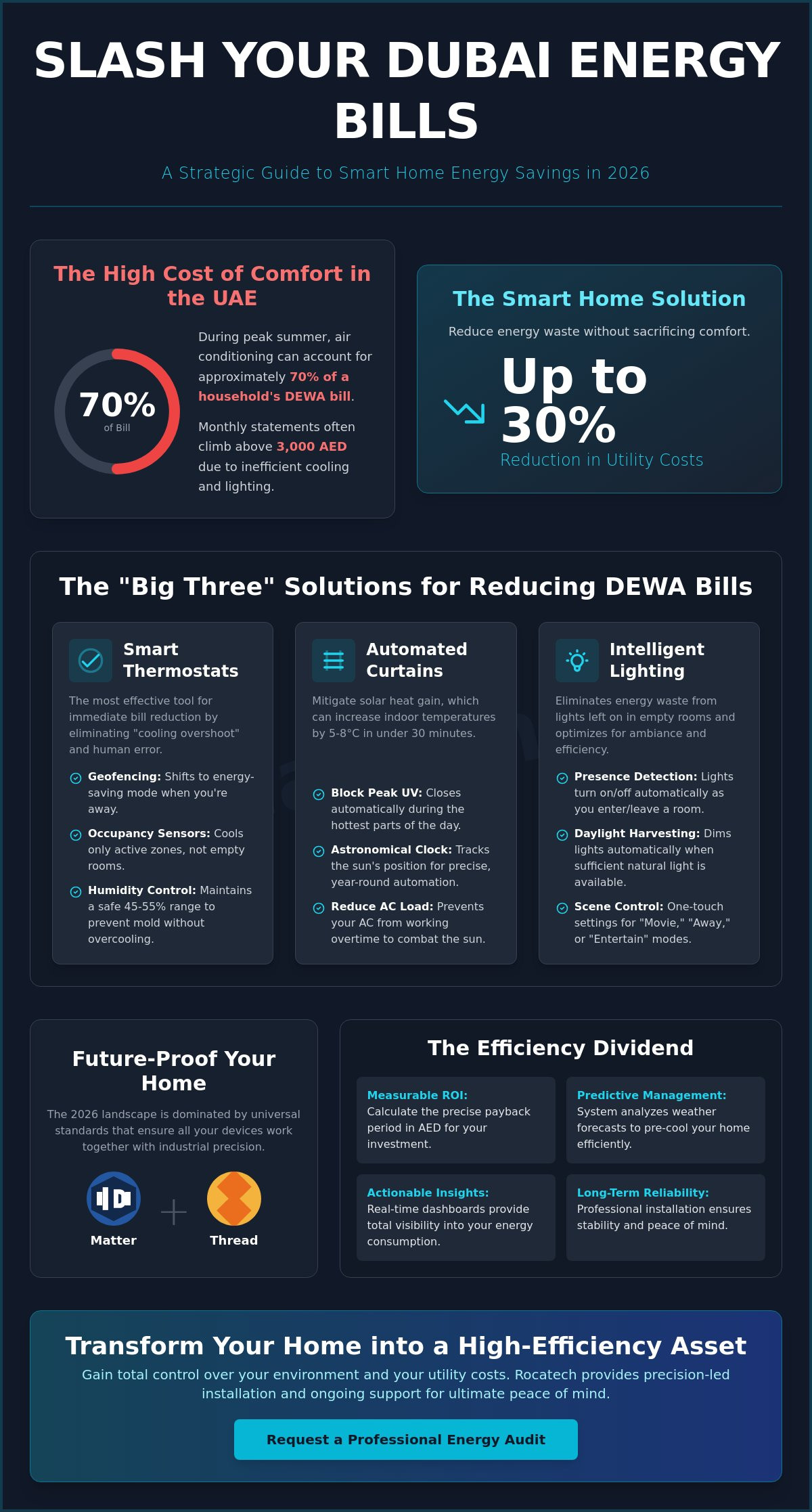
Did you know that cooling systems account for approximately 70% of a typical household energy bill during the peak summer months in the UAE? It's a common frustration for residents to see their monthly DEWA statements climb above 3,000 AED simply because an AC unit was left running in an empty guest room or the lighting wasn't optimized. You deserve a residence that works for you, not against your budget. By implementing a comprehensive energy saving smart home dubai strategy, you can reduce waste by up to 30% without sacrificing a single degree of comfort.
We understand that luxury and technical efficiency must coexist. This 2026 guide provides a precise roadmap to integrating robust climate controls and intelligent monitoring systems that secure long-term value for your property. You'll discover how to automate your environment for peak performance, ensuring your home remains a sanctuary of precision and reliability while your utility costs stay firmly under control. From automated zoning to real-time consumption analytics, we'll show you how to transform your living space into a high-efficiency asset that offers total peace of mind.
Key Takeaways
- Analyze the 2026 Dubai energy landscape to understand how an integrated ecosystem of sensors and controllers effectively manages evolving DEWA tariff structures.
- Identify the primary drivers of household consumption and learn how an energy saving smart home dubai solution automates AC and lighting for maximum efficiency.
- Utilize a structured framework to calculate the precise payback period in AED, ensuring your technology investment yields a measurable return on investment.
- Implement a step-by-step audit to detect energy leaks and customize automation logic to suit specific lifestyle scenarios like work-from-home or travel.
- Discover the value of a precision-led partnership that provides professional-grade installation and ongoing support for long-term system reliability and peace of mind.
The State of Energy Saving Smart Homes in Dubai for 2026
An integrated energy saving smart home dubai ecosystem functions as a sophisticated network of sensors, actuators, and controllers designed to optimize resource consumption without human intervention. By 2026, these systems have evolved from luxury additions into essential infrastructure for UAE residents. This transition is driven by the Dubai Clean Energy Strategy 2050 and a shift in DEWA tariff structures that increasingly reward efficiency. High-performance villas and apartments now rely on home automation systems to maintain precision control over HVAC, lighting, and water heating cycles.
Manual energy management fails during the extreme 45°C peaks of the Dubai summer. Relying on residents to adjust thermostats or close blinds based on the sun's position is ineffective and leads to significant energy leaks. Smart automation provides a robust solution by utilizing real-time environmental data to make micro-adjustments every second. This level of technical reliability ensures that cooling systems operate at peak efficiency, preventing the "cooling lag" that often results in spiked DEWA bills during the hottest months of the year.
Understanding the Efficiency Dividend
Modern smart homes have transitioned from reactive settings to predictive energy management. Instead of cooling a room once it becomes uncomfortably warm, the system analyzes external weather forecasts and occupancy patterns to pre-cool spaces efficiently. The Efficiency Dividend is the measurable reduction in DEWA consumption via automation. Real-time data dashboards provide residents with total visibility into their usage, transforming vague monthly bills into actionable insights that change household habits and drive long-term savings.
Matter and Thread: The 2026 Connectivity Standards
The 2026 technology landscape is dominated by Matter and Thread protocols. These universal communication standards ensure that devices from different manufacturers work together with industrial precision. Interoperability is the key to avoiding energy leaks; when your smart blinds, AC, and occupancy sensors communicate on a single fabric, they don't work at cross-purposes. Adopting these standards is a critical step in future-proofing your Dubai home, ensuring your hardware remains compatible and efficient as software updates evolve over the next decade.
For the modern homeowner, smart automation represents a strategic investment in stability. It moves the focus from short-term fixes to a total solution for energy optimization. By implementing a comprehensive energy saving smart home dubai strategy, residents gain peace of mind knowing their property is optimized for the local climate and current regulatory environment.
The "Big Three" Solutions for Reducing DEWA Bills
Achieving a sustainable energy saving smart home dubai requires addressing the primary sources of consumption. In the UAE, air conditioning represents approximately 70% of a typical household's electricity usage according to regional energy audits. Relying on manual adjustments often leads to "cooling overshoot," where rooms are kept unnecessarily cold due to delayed human reaction. Automated optimization replaces human error with precision, creating a holistic cooling strategy that stabilizes the internal environment while reducing the load on the electrical grid.
Smart Thermostats: Mastering Dubai’s AC Demand
A smart thermostat is the most effective tool for immediate bill reduction. In large villas, geofencing technology identifies when residents are 5 kilometers away, allowing the system to shift into energy-saving mode automatically. Integrated occupancy sensors ensure cooling is focused only on active zones. These systems also monitor humidity levels to prevent mold growth, maintaining a safe 45% to 55% range without running the compressor at maximum capacity 24 hours a day. This precision ensures the equipment operates only when necessary, extending the lifecycle of the HVAC unit.
Automated Curtains and Solar Heat Gain
Solar heat gain through floor-to-ceiling glass in Downtown Dubai apartments can increase internal temperatures by 5 to 8 degrees Celsius in under 30 minutes. Smart curtain motors mitigate this by blocking peak UV radiation when the residence is empty. By utilizing UAE-specific astronomical clocks, these systems track the exact sunrise and sunset times throughout the year. They automatically close shears or blackout blinds during the harshest hours of the afternoon. This proactive barrier reduces the thermal load before the AC system has to react, preventing the spike in energy demand associated with rapid cooling.
Smart Lighting Control: Beyond Turning Lights Off
Lighting accounts for a smaller but consistent portion of the DEWA bill. Implementing the principles found in this smart lighting control guide allows for daylight harvesting, where sensors dim indoor lights based on the amount of natural light available. Motion sensors in hallways and bathrooms eliminate "ghost energy" by ensuring lights only operate when needed. This level of automation provides a "set and forget" energy management experience, offering residents peace of mind that their home is operating at peak efficiency. For those seeking long-term stability, consulting an expert at Rocatech can help tailor these systems to specific floor plans.
Evaluating ROI: When Does Home Automation Pay for Itself?
Many homeowners view smart technology as a luxury or an unnecessary upfront expense. This perspective overlooks the financial reality of property management in the UAE. In a climate where cooling accounts for up to 70% of total energy consumption, an energy saving smart home dubai setup functions as a high-yield investment rather than a sunk cost. The payback period for smart hardware typically ranges from 18 to 36 months, depending on the scale of the system and the size of the property.
Automation protects your most expensive asset: the HVAC system. Constant cycling and running at peak capacity during peak tariff hours lead to premature mechanical failure. Smart controllers utilize predictive logic to maintain comfort while reducing the load on compressors. Replacing a central AC unit in Dubai can cost between 10,000 د.إ and 25,000 د.إ. By extending the operational life of this equipment by just 20%, the system pays for itself before you even consider the monthly DEWA savings.
The Cost of Inaction vs. The Price of Integration
Consider a standard five-bedroom villa with an average monthly DEWA bill of 3,500 د.إ. Over five years, the total expenditure reaches 210,000 د.إ. Without smart interventions, you remain vulnerable to rising utility tariffs and system inefficiencies. A professional smart home installation Dubai targets a 20% to 30% reduction in waste. This translates to potential savings of up to 63,000 د.إ over five years. Beyond the bill, you gain hidden savings from reduced maintenance schedules and the prevention of water leaks through automated shut-off valves.
Strategic Hardware Selection for Maximum Savings
ROI is maximized by prioritizing high-impact hardware over aesthetic gadgets. While smart bulbs are popular, they offer a lower return compared to automated shading and climate control. A centralized smart hub gateway is a strategic requirement. It ensures that various sensors work in unison, such as triggering motorized blinds when solar gain reaches a specific threshold. For the energy saving smart home dubai, you must select industrial-grade sensors. Low-quality components often fail in Dubai's extreme heat, leading to replacement costs that erode your initial savings. Robust sensors ensure the system remains reliable for years, providing the peace of mind that your investment is secure.
Finally, the "Green Premium" in Dubai's real estate market is accelerating. Properties with integrated energy management systems now command higher resale values. Buyers in 2026 actively seek homes with documented lower running costs, making efficiency a key differentiator in a competitive market.
Implementation Guide: Tailoring Tech to Your Dubai Residence
Achieving a high-performance energy saving smart home dubai requires a systematic audit of your current consumption patterns. You can't manage what you don't measure. Start by analyzing your DEWA Smart Management dashboard to identify peak usage hours. Inspect the physical envelope of your home; a 2mm gap in balcony door seals or degraded window caulking can increase cooling costs by 15% during the humid months between June and September. Precision in the initial assessment prevents over-spending on hardware that doesn't address your specific leaks.
Automation logic should mirror the rhythm of your life in the UAE. Consider these three common scenarios for customization:
- Work-From-Home: Program the system to maintain 23°C in the home office while allowing the rest of the house to drift to 26°C.
- School Terms: Set a "Morning Rush" scene that activates water heaters 30 minutes before wake-up and shuts down all non-essential lights at 7:30 AM.
- Summer Travel: Use a "Vacation Mode" that cycles the AC for 20 minutes every three hours to prevent mold growth without running the compressor 24/7.
Designing a truly efficient map requires more than off-the-shelf gadgets. It demands a professional eye to ensure all protocols, from Zigbee to Matter, communicate without latency. The Rocatech Dubai partner profile highlights how technical expertise ensures your automation isn't just a luxury, but a robust tool for long-term value. Professional consultation bridges the gap between basic connectivity and industrial-grade reliability.
Villa Strategies: Gardens, Pools, and Multi-Zone Cooling
Large properties in Al Barari or Emirates Hills face significant energy drains from external systems. Smart irrigation is a priority; these systems use local weather data to skip watering cycles if humidity is high or rare rainfall occurs. For internal cooling, move away from a single thermostat. Multi-zone HVAC control allows you to isolate the guest wing or formal majlis when they aren't in use. This targeted approach can reduce total AC load by 25% in villas exceeding 6,000 square feet.
Apartment Optimization: JVC, Marina, and Downtown
In high-rise environments like JVC or Dubai Marina, you often deal with fixed HVAC layouts. You can still maximize your energy saving smart home dubai by focusing on "energy vampires." Use smart plugs to identify appliances, such as older wine coolers or gaming rigs, that draw power even when idle. For tenants in Downtown, portable Zigbee-enabled sensors offer a non-invasive way to automate lighting and cooling. These devices move with you to your next property, ensuring your investment in efficiency is never lost.
Rocatech: Your Partner in Precision Energy Efficiency
Achieving a high-performance energy saving smart home dubai requires more than off-the-shelf gadgets. Rocatech has evolved beyond a traditional equipment supplier to become a long-term efficiency partner for homeowners. We focus on the entire lifecycle of your home automation system. This ensures that every sensor and controller contributes to a measurable reduction in your DEWA statement. Our methodology is rooted in industrial precision; we bring the same level of reliability found in factory automation to the residential sector of the United Arab Emirates. We believe that efficiency is a continuous process, not a one-time purchase.
Dubai residents trust our expertise because we prioritize stability. In a market often flooded with temporary solutions, Rocatech stands as a permanent authority. We don't just sell hardware. We provide a consultative partnership that starts with your specific energy goals and continues through years of operational support. This commitment to long-term value is why our systems are found in the city's most prestigious villas and apartments.
Professional Installation vs. DIY Frustration
Many homeowners in Dubai attempt to piece together smart systems using various retail brands. This often leads to automation fatigue where devices fail to communicate. A 2023 industry study indicated that 40% of DIY smart home users report connectivity issues within the first six months. Rocatech eliminates these risks through professional integration. We ensure that disparate hardware brands operate on a single, robust network. This centralized approach closes security gaps and prevents the system failures that plague uncoordinated setups. You gain peace of mind knowing your cooling and lighting systems are optimized by experts who understand Dubai's specific climatic demands. Reliability is our primary metric for success.
Getting Started: Your Roadmap to a Smarter Home
Your journey to a more efficient villa or apartment begins with a technical audit. During your first consultation at our Oud Metha headquarters, our engineers analyze your floor plan and current energy consumption patterns. We don't believe in one-size-fits-all packages. We customize a roadmap based on your specific layout and lifestyle needs. This structured process ensures your investment in an energy saving smart home dubai delivers maximum ROI. You're joining a community of data-driven residents who prioritize sustainability without sacrificing comfort.
- Initial site assessment: A comprehensive audit of your current energy footprint.
- Custom hardware selection: Choosing components based on 2026 compatibility standards.
- Precision installation: Professional mounting and network stress testing.
- Ongoing support: Continuous monitoring to ensure your system remains efficient.
Precision is the hallmark of every Rocatech project. We provide the technical stability required to manage Dubai's high energy demands effectively. Visit our office in Oud Metha to speak with a consultant about your home's potential. Let's build a smarter, more efficient future together.
Securing Your Home’s Future Efficiency
Transitioning to an energy saving smart home dubai requires a shift from simple gadgets to integrated, industrial-grade systems. As DEWA continues to refine its tariff structures through 2026, the ability to monitor and automate consumption becomes a critical asset for every resident. By focusing on the "Big Three" solutions, you'll achieve a measurable reduction in monthly utility expenses while increasing the long-term value of your property. It's no longer just about convenience; it's a strategic financial decision for the modern household.
Rocatech has operated from our Oud Metha headquarters since 2021, bringing the same level of precision found in industrial automation to Dubai’s luxury residential market. We understand the specific demands of UAE building standards and provide robust, tailored solutions that offer total reliability. Our team ensures that your transition to a more efficient home is seamless and evidence-based. We're here to provide the technical expertise needed for peace of mind in a high-stakes environment.
Optimize Your Home’s Energy Efficiency with Rocatech
Taking control of your energy footprint is a practical step toward a more sustainable and cost-effective lifestyle in the Emirates.
Frequently Asked Questions
How much can a smart home actually save on a DEWA bill in Dubai?
A professionally integrated energy saving smart home dubai system typically reduces monthly DEWA bills by 20% to 30%. These savings stem primarily from optimized HVAC control and automated lighting schedules. According to data from DEWA's Smart Living initiative, households utilizing real-time monitoring and smart automation consistently achieve lower consumption brackets, resulting in significant annual cost reductions for residents across the United Arab Emirates.
Is it worth installing a smart thermostat in a rented apartment in Dubai?
Installing a smart thermostat in a rented apartment provides immediate returns on cooling costs, which account for 70% of a typical Dubai utility bill. Most modern units are non-invasive and can be removed when your lease ends without damaging the property. This allows tenants to maintain precise climate control and reduce energy waste while preserving their security deposit and taking the technology to their next residence.
What are the most effective energy-saving smart devices for a Dubai villa?
The most effective configuration for a Dubai villa includes smart AC controllers, automated solar shading, and intelligent irrigation systems. Smart AC controllers optimize compressor cycles to prevent over-cooling. Automated blinds react to the 45-degree Celsius summer heat by closing during peak sunlight hours. These integrated solutions address the highest consumption points in a large property, ensuring a robust and efficient energy profile for the homeowner.
Do smart home systems work with existing AC units in older Dubai buildings?
Smart home systems are compatible with older AC units through the use of infrared bridges or smart thermostat adapters. These devices replicate remote control signals to provide modern scheduling and remote access capabilities to legacy split or window units. This integration transforms inefficient older hardware into a manageable component of an energy saving smart home dubai strategy without requiring a full HVAC system replacement or expensive structural modifications.
How long does the professional installation of an energy-saving system take?
Professional installation of a comprehensive energy management system generally requires one to three business days to complete. A standard three-bedroom apartment is typically finished within six to eight hours, while a large villa requires a multi-day phased approach. This timeline includes hardware mounting, network configuration, and rigorous testing to ensure every component operates with the precision required for long-term reliability and peak performance.
Can I monitor my energy consumption in real-time from my phone?
You can monitor your entire home's energy consumption in real-time through dedicated mobile applications linked to smart meters or hub controllers. These interfaces provide granular data on kilowatt-hour usage per appliance, allowing you to identify high-drain devices instantly. This level of transparency is essential for making informed adjustments to your daily habits and ensuring your DEWA consumption remains within your target budget throughout the year.
Will a smart home system still work if the internet goes down?
Most professional-grade smart home systems retain their core functionality and pre-set schedules even if the internet connection is lost. Local communication protocols like Zigbee or Z-Wave allow devices to interact with each other without cloud access. While you'll lose the ability to control the system remotely via your phone, your AC schedules and motion-sensor lighting will continue to operate based on their last saved configurations.
What is the difference between a smart switch and a smart plug for energy saving?
A smart switch is a permanent fixture that replaces your traditional wall switch to control hardwired lights or fans. A smart plug is a portable adapter that sits between a standard wall outlet and an appliance, such as a lamp or coffee machine. For long-term energy saving, smart switches offer a more seamless and robust solution for built-in lighting, while smart plugs are ideal for monitoring individual electronic devices.